The Potter’s Canvas: Ceramics and Painting in the 20th Century
This exhibition looks at how 20th-century British ceramicists used drawing, painting and mark-making to transform the surface of clay. Opening at Hatton Gallery on 19 September 2026.
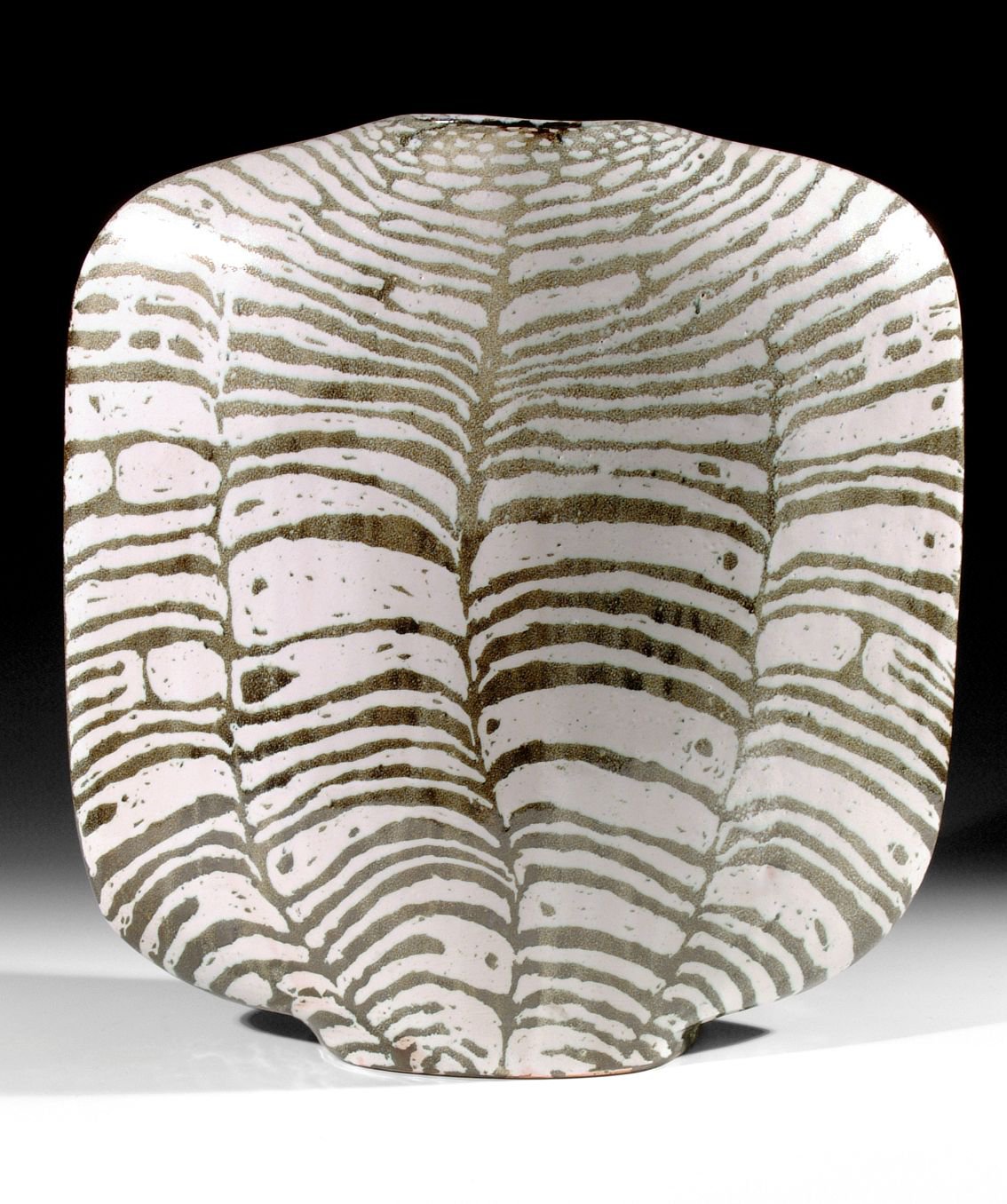
The Potter’s Canvas: Ceramics and Painting in the 20th Century is a new exhibition opening at Newcastle University's Hatton Gallery on 19 September 2026. This exhibition looks at how 20th-century British ceramicists used drawing, painting and mark-making to transform the surface of clay.
While often regarded as a sculptural medium, many artists also saw clay as their canvas. Pioneer studio potters used minimal, elegant brushwork to enhance form but, as the 20th-century progressed, decoration took on new significance, becoming an important part of the making process and a way to convey ideas and subvert expectations. By pairing ceramics from the Shipley Art Gallery with paintings and prints from the Hatton Gallery for the first time, the exhibition examines how the worlds of pottery and painting shaped each other.
The exhibition features over 70 works, highlighting the exceptional quality and range of the Shipley’s collections with ceramics by Bernard Leach, Michael Cardew, Lucie Rie, Hans Coper, James Tower, Gordon Baldwin, Carol McNicoll, Alison Britton, Stephen Dixon and Philip Eglin, alongside paintings and prints from the Hatton’s collection by Patrick Heron, William Scott, Adrian Heath and Victor Pasmore. The exhibition will also include key works on loan from the Laing Art Gallery such as a vase by Elizabeth Fritsch and a still life by Winifred Nicholson.
Central to the exhibition will be James Tower’s (1919-1988) striking black and white ceramics, their surfaces animated by energetic lines. While his late work, the majestic vertical form titled Boursa (1984), was acquired by the Shipley Art Gallery in the year that it was made, this exhibition will provide the chance to see important early pieces displayed for the first time since their acquisition in 2019.
A new generation of ceramicists, such as Alison Britton (b.1948) and Carol McNicoll (1943-2025), graduating from the Royal College of Art in London in the early 1970s, brought colour, pattern and a spontaneous painterly approach to the ceramic surface. While the gestural marks show the influence of Abstract Expressionism, a diverse range of sources from textiles and ceramic traditions enriched these works. Britton has written about the essential connections between pottery and painting and often paints the flat slabs of clay before and after they are assembled into forms.
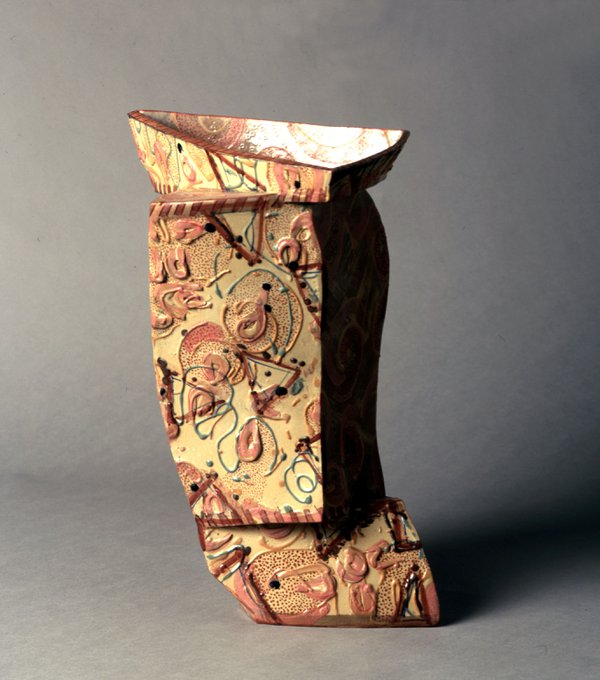
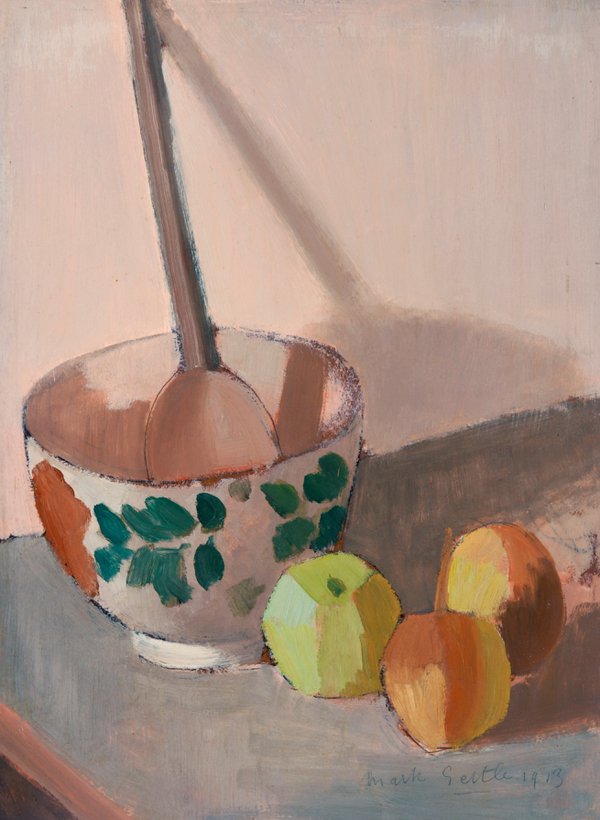
Predominantly flat ceramics – whether tiles, large dishes, or the planes of angular objects – recur in the exhibition as an ideal surface on which to draw and paint, and this idea of flatness is also explored in 20th-century still-life painting. Mark Gertler’s (1891-1939) Still Life with Bowl, Spoon and Apples (1913) from the Hatton’s collection is just one example of the depiction of ceramics in paint, showing the influence of Post-Impressionist painters such as Paul Cézanne (1839-1906). The exhibition will examine how the familiar, everyday quality of ceramics allowed them to become sites of experimentation, whether depicted on canvas or made from clay.
The Potter’s Canvas: Ceramics and Painting in the 20th Century is open at the Hatton Gallery, Newcastle upon Tyne, from 19 September 2026 to 16 January 2027, Monday to Saturday, 10am-5pm. The exhibition is arranged across the Hatton’s four galleries and organised thematically. Entry is free. Visit the Hatton Gallery website for more information: hattongallery.org.uk
Notes to Editors
Hatton Gallery has been at the heart of cultural life in the North East since the early 20th century. The gallery has a dynamic and illustrious history, unique in its relationship to the Fine Art department at Newcastle University.
The Hatton’s collection includes works from the 14th century to the present day, and the gallery’s only permanent display, Kurt Schwitters’ Merz Barn Wall, was brought to the gallery in 1965 and incorporated into the fabric of the building.
In October 2017, the Hatton underwent a £3.8 million redevelopment supported by National Lottery Players through the National Lottery Heritage Fund. The redevelopment allowed the Hatton to upgrade exhibition spaces, restore architectural features, conserve Schwitters’ Merz Barn Wall, as well as improve visitor facilities. The Hatton Gallery is managed by North East Museums on behalf of Newcastle University.
More at www.hattongallery.org.uk
The Shipley Art Gallery’s studio ceramics collections are indebted to the expertise and generosity of two collectors, Henry Rothschild (1913-2009) and John Christian (1942-2016). We are grateful to the HM Government Acceptance In Lieu scheme for allocating part of these collections to the Shipley in 2013 and 2019 as well as the continued support of their families.