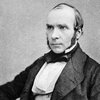
5 July 1792 – 25 October 1881
Gifted surgeon and epidemiologist who co-founded what would become the Newcastle College of Medicine and the Newcastle Eye infirmary. One of the original 300 Fellows of the Royal College of Surgeons of England.

5 July 1792 – 25 October 1881
Gifted surgeon and epidemiologist who co-founded what would become the Newcastle College of Medicine and the Newcastle Eye infirmary. One of the original 300 Fellows of the Royal College of Surgeons of England.
RVI Newcastle
Thomas Michael Greenhow was born on the 5th July 1792, the second son of army surgeon Edward Martin Greenhow and Mary Powditch.
He graduated from the University of Edinburgh medical school and went on to study surgery at Guys and St Thomas Hospitals in London gaining his Membership of the Royal College of Surgeons in 1814.
He spent much of his career working in Newcastle and had an interest in all areas of surgery, particularly in ophthalmology, obstetrics, and gynaecology at which he excelled.
Greenhow was a pioneer in the establishment of Durham University and lectured at Newcastle Medical College.
He worked as a senior surgeon at the Newcastle Infirmary (later renamed Royal Victoria Infirmary) for many years, and was instrumental in its expansion in the 1850s.
While working at the RVI he trained John Snow and together they undertook detailed research aimed at ending the Cholera pandemics. They also advocated for the use of chloroform as an anaesthetic in major surgeries. Greenhow's son, surgeon Henry Martineau Greenhow, reported on his father's surgical success in using chloroform in medical paper The Lancet.
Greenhow and his nephew, physician Edward Headlam Greenhow, dedicated years of research into medical hygiene and public health. During the 1850s they published papers, delivered lectures and wrote letters to the authorities warning of impending cholera pandemics due to overcrowding, dirt, bad drainage, and impure air of the city. These letters were ignored by those in power and there were further outbreaks of the disease.
He also developed several surgical inventions. In 1833 he designed and produced a fracture-bed, which had numerous advantages in supporting the limb in a horizontal position while still allowing some movement thereby improving the recovery and comfort of patients This fracture-bed was used for years at the Newcastle Infirmary.
Greenhow married Elizabeth Martineau of the socially reformist Martineau family and they had four children together. Elizabeth died of tuberculosis in 1850 and in 1854 Thomas married Anne Lupton who was the daughter of his own daughter's father-in-law William Lupton.
Thomas Greenhow retired to Leeds in 1860, dying there on 25 October 1881 at Newton Hall.
Explore more from our collections and beyond
https://scp.rcseng.ac.uk/client/en_GB/default/search/detailnonmodal/ent:$002f$002fSD_ASSET$002f0$002fSD_ASSET:374231/one?qu=%22RCS%3A+E002048%22&rt=false%7C%7C%7CIDENTIFIER%7C%7C%7CResource+Identifier
https://scp.rcseng.ac.uk/client/en_GB/default/search/results?qu=%22RCS:+a50670%22&rt=false|||IDENTIFIER|||Resource+Identifier
https://wellcomecollection.org/concepts/dqxv35zt
:watermark(https://www.northeastmuseums.org.uk/text-image-gen/By+Unknown+author+-+httpswwwndfhsorguk+Public+Domain+httpscommonswikimediaorgwindexphpcurid91804067,0,0,0)/https://s3-eu-west-1.amazonaws.com/atwam-images-files/production/images/content/twmuseums/2026-05/719116.jpg)
By Unknown author - https://www.ndfhs.org.uk/, Public Domain, https://commons.wikimedia.org/w/index.php?curid=91804067