A Mycenaean Odyssey
A dream opportunity
Emily Oldridge, PhD Student in Classics at Newcastle University
I have always been a keen museum visitor. As my family and friends (who have had to drag me away) know well, I could spend hours in a museum. To me, a museum is a home of stories, both old and new. It tells the tales of lives lived long ago but it also reflects our relationship with the past in the stories we choose to tell. So when I was presented with the opportunity to curate a mini exhibition at Great North Museum: Hancock, it honestly felt like a dream come true.
How did it all begin?
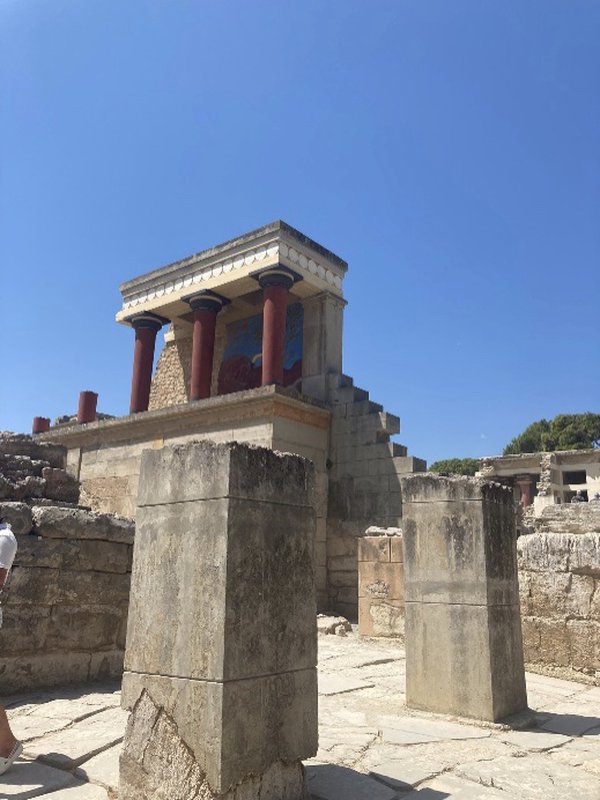
The story of my mini exhibition starts back in September 2025, when I embarked upon a new adventure, beginning my PhD in Classics at Newcastle University. My research project aims to explore how popular interest in Greek myth has impacted upon museum exhibitions and on academic research more generally. My focus is on the Greek Bronze Age (c. 3200-1100 BCE), a period in which the Greek myths are believed to have taken place. From the minotaur lurking in the labyrinth to the Greek heroes sailing to Troy, Greek Bronze Age archaeology is constantly entangled with these mythical tales. My research hopes to explore how this connection between myth and archaeology has shaped the priorities of archaeologists.
Which objects made the cut?
As my research is so focused on how the past is communicated with the public, I felt that it would be invaluable to receive feedback from the public about how they liked to learn about the past. Therefore, when the opportunity arose to curate a mini exhibition at Great North Museum: Hancock, I felt that it was the perfect addition to my research project. But how is an exhibition actually put together? For someone who had done extensive research on museum exhibitions, I knew very little about how they were organised. I have learnt a lot about the process over the past few months, and am keen to share the journey which brought this mini exhibition to life.
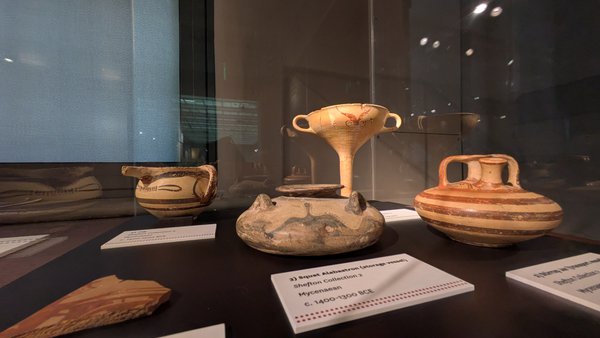
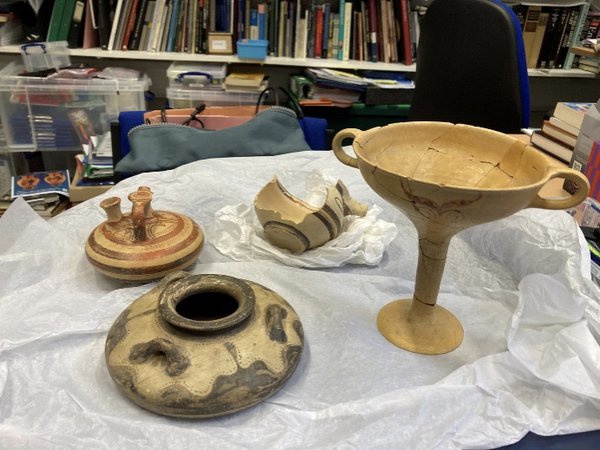
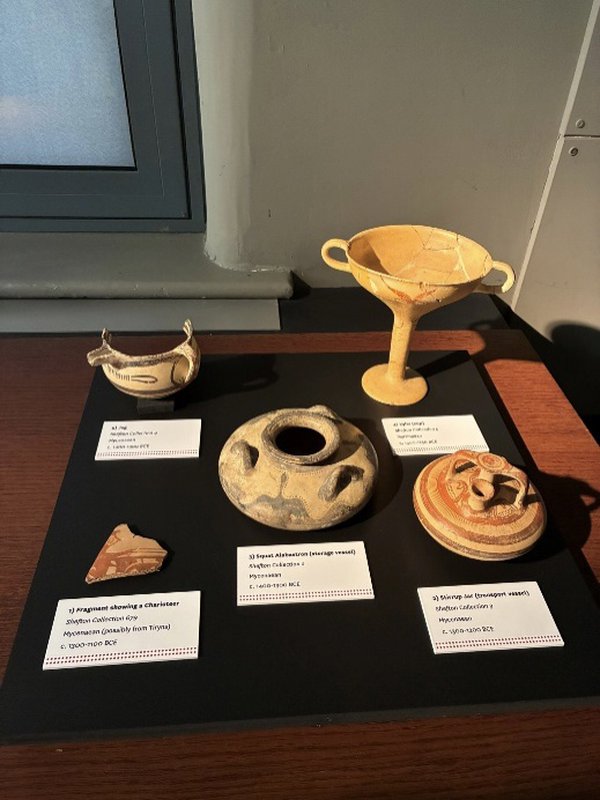
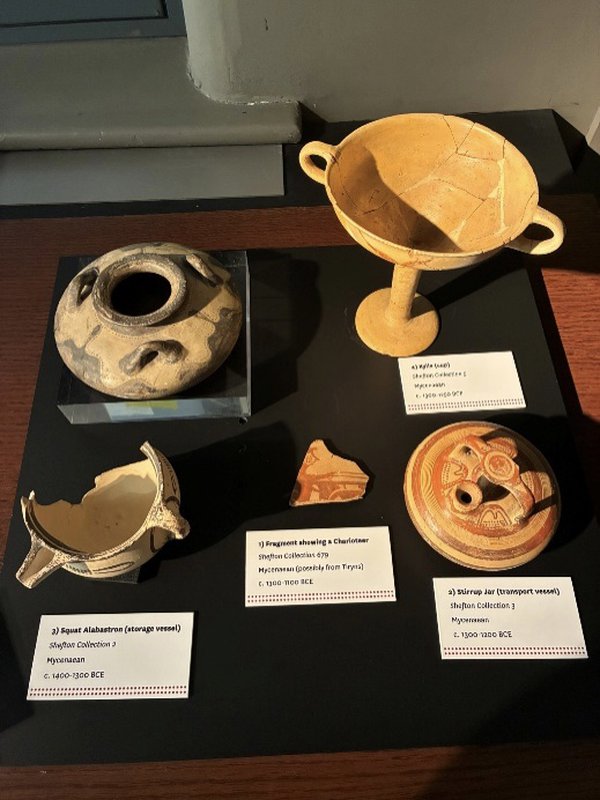
My first step was finding the right objects. Great North Museum: Hancock has four Mycenaean vases that are not usually on display, so I knew that I wanted to include these. Then, there was a gorgeous Mycenaean vase fragment depicting a chariot and rider currently on display in the Shefton Gallery, so that was another obvious choice.
What story did I want to tell?
Now I had selected my objects, the next step was to research them. I began with the objects themselves, I carefully observed, measured and drew the four Mycenaean vases to help to better understand them. Next, I researched similar objects, searching through the extensive databases of the British Museum and the Metropolitan Museum of Art, New York, for similar artefacts. After this, I read Dr Guy Middelton’s research project (which was submitted as an essay during his time at Newcastle University) on the Mycenaean collection at Great North Museum: Hancock, which helped to date and understand the iconography on the vases. My next stop was to check the record cards from the museum for further information, though there was little extra to glean from these. I also began some archival research into the acquisition of the artefacts, but information was limited about their post-excavation history. The charioteer fragment is said to be from Tiryns, but I could not locate findspots for the other four vases and work will continue to be done on how these pots came into the collection.
Once the objects had been selected and researched, it was now time to decide on the narrative for my exhibition. What adventure did I want to take the museum visitor on? My inspiration came from the charioteer fragment. The first time I saw it I thought how the artefact could be described in two different ways: in relation to the myth and to reality. In one exhibition, the charioteer is the Greek hero Achilles bravely riding into battle, but in another display, the charioteer is an unnamed Mycenaean warrior, and the fragment symbolises the importance of chariots in establishing social status in the Mycenaean period. One fragment but two contrasting interpretations.
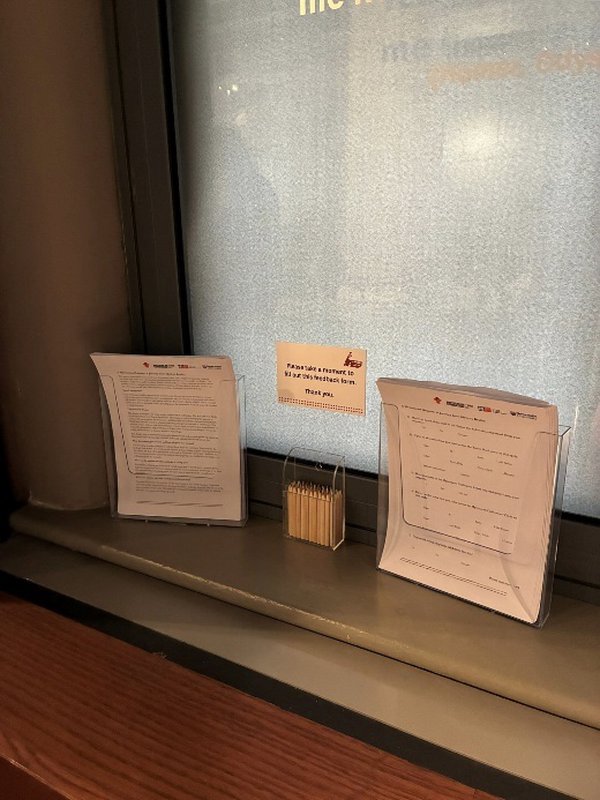
I wished to explore this tension between myth and reality in my mini exhibition. Therefore, each artefact tells two stories, separated in two paragraphs across the information panel: one about how it relates to Greek myth and the other about how it relates to the real Mycenaeans. Myth and Reality is a popular way to explore the Greek Bronze Age in exhibitions, and a key part of my research is to investigate the consequences of this approach and how museums can improve their displays in the future. It seemed natural that my exhibition should focus on whether visitors preferred the myth interpretations or the reality interpretations, so I created a feedback form and information sheet to allow visitors to share their views on how they wish to learn about the past.
How do you design an exhibition?
The title 'A Mycenaean Odyssey: A Journey from Myth to Reality' was inspired by the upcoming release of the Odyssey film, directed by Christopher Nolan, in July 2026. Many museum visitors enjoy a hook to help them access information, consequently I felt that over the summer of 2026, visitors would likely have heard of the Odyssey which may encourage them to visit the display. An odyssey is a journey, and this also felt fitting for the display as I hoped to take visitors on a journey to discover the real Mycenaeans behind the myth.
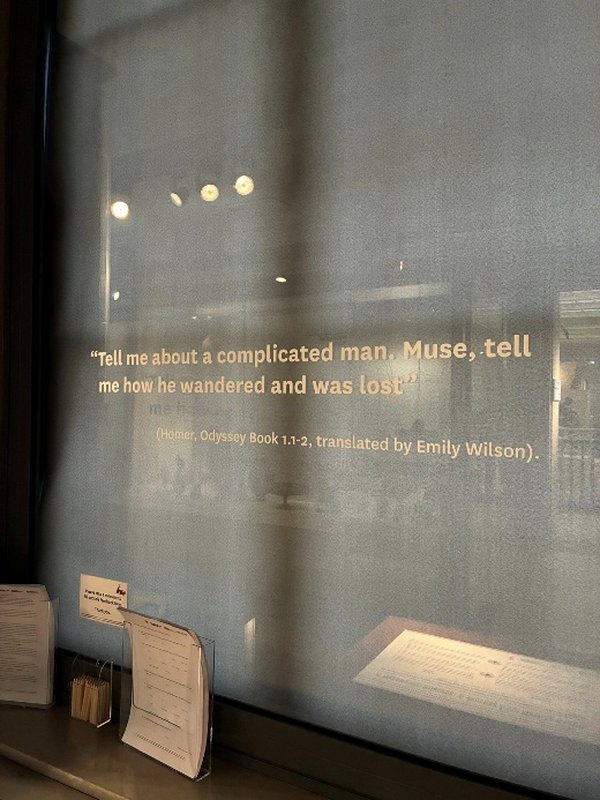
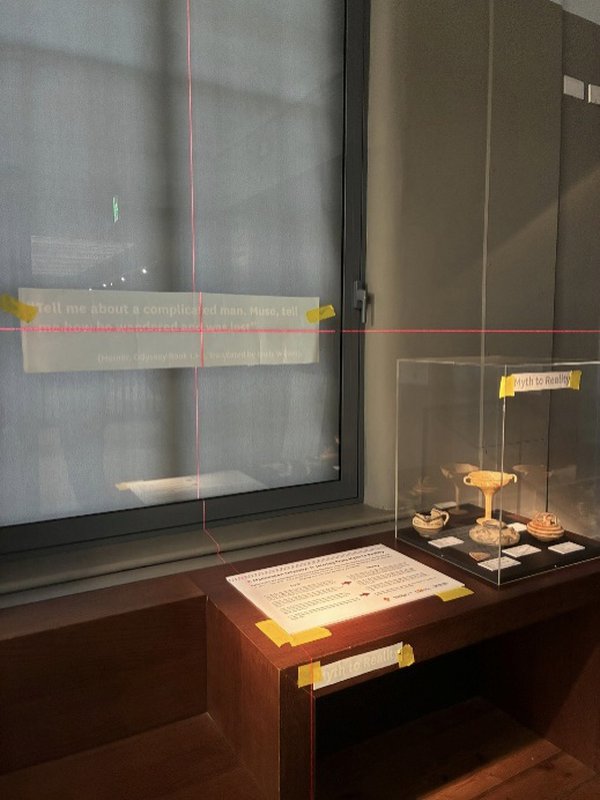
After this, I began designing the information panel and labels. After discussions with my supervisors, Dr Matthew Haysom and Dr Sally Waite, I placed the information on myth on one side and reality on the other, using an arrow to show the connection between the paragraphs. I used inspiration from the vases themselves to create a decorative border for the information panel. In the end, we decided upon a simple dot motif taken from the Mycenaean stirrup jar in the exhibition and a drawing of the charioteer to use on the label about the feedback forms. Then, after a lot of proofs being sent back and forth between Colin Lowery from Incite Design, Andrew Parkin from Great North Museum, Sally Waite and myself, we at last had the final version ready for printing. It was at this point we also decided to add the opening line of Emily Wilson’s translation of The Odyssey to the window behind the exhibition, as a way to further link the exhibition to epic poem.
What happens on installation day?
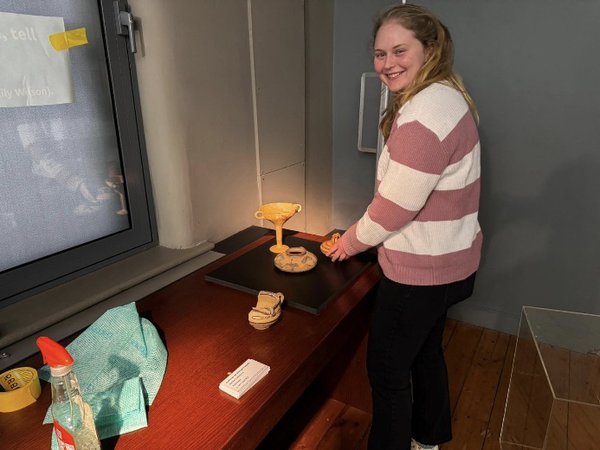
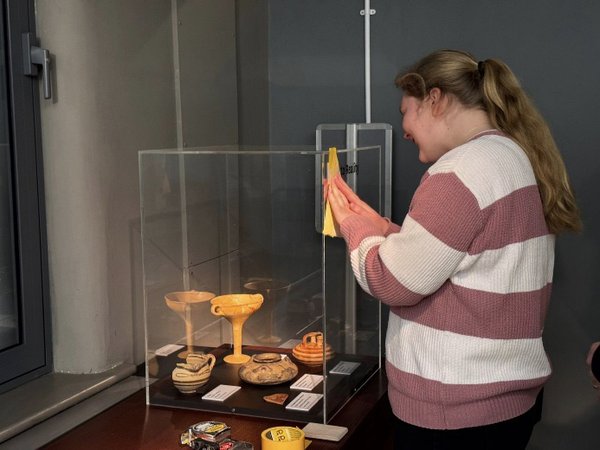
At last, it was time to install the exhibition. It was sunny afternoon in March when I met Colin, Andrew, Sally and fellow PhD student Zoe at the museum to install the exhibition. We began by removing the artefacts from the previous exhibition and cleaning the case and bench. Then, it was time for the exciting part – I began to arrange the artefacts in the case, trying different arrangements and some blocks for levels (which we decided against in the end). After this, the case was lifted back on, and it was time to add the vinyl and stick down the information panel. Colin had lasers to ensure everything was straight and I even got to help add the title vinyl on the case itself.
What's next for the exhibition?
In a way, I feel I have been on my own odyssey in curating this mini exhibition, watching it grow from an initial idea to a real display. It has been a wonderful opportunity, and I am very grateful for the support of everyone who made it happen. Thank you also for everyone who has already visited the exhibition and for the lovely feedback that I have received. My mini exhibition will be on display until September so please come and check it out and fill out a feedback form. This will help to improve the museum experience and communication of archaeology in the future.