Charles Parsons

13 June 1854 – 11 February 1931

World-changing inventor of the steam turbine-generator

Related Stories:

How Charles Parsons connects to other stories in the collection

Location:

C A Parsons Works, Shields Road, 
Newcastle upon Tyne, NE6 2YL

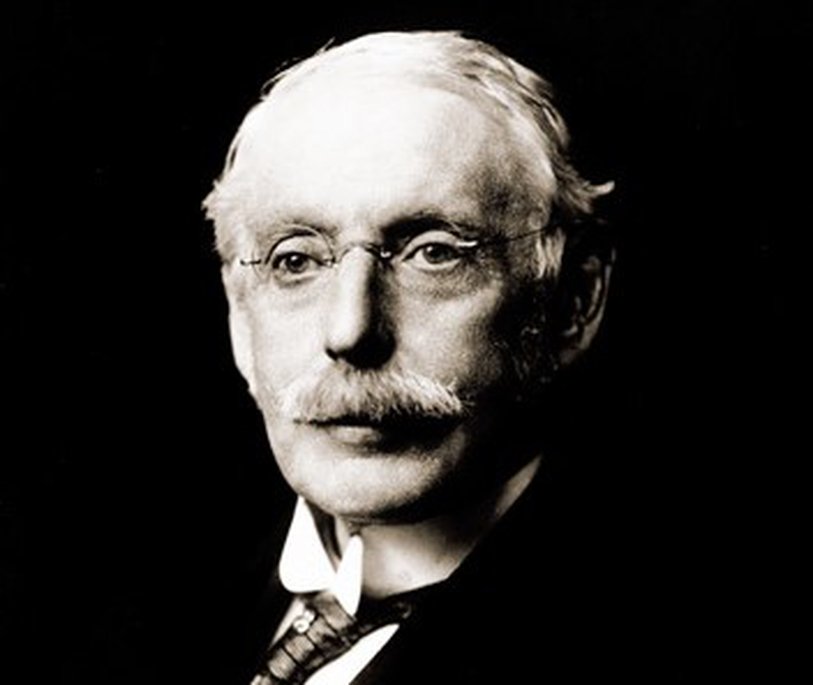
Charles Algernon Parsons was the youngest son of the 3rd Earl of Rosse, an Anglo-Irish aristocratic family. He was born in London, his father William was an astronomer who built several giant telescopes, his mother Mary was a pioneer in photography. He grew up in Ireland, then studied mathematics at Trinity College Dublin and St John’s College, Cambridge where he graduated in 1877. He then made the unusual move for an Earls son of joining the engineering company W G Armstrong as an apprentice.  

He later moved to Kitsons in Leeds for a while before returning to Tyneside to join Clarke, Chapman and Co, in 1884.  There he became head of their electrical equipment development and started to develop turbine engines to drive an electrical generator.  

In 1889, Charles founded C.A, Parsons and Company which manufactured steam generators, dynamos and other electrical supplies. He also set up the Newcastle and District Electric Lighting Company and in 1890, the Forth Banks Power station, the first in the world to generate electricity using turbo generators.  

Parsons also set up the Parsons Marine Steam Turbine Company and created the Turbinia –the first steam turbine powered steamship. The unannounced appearance of this vessel at the Fleet Review in 1897 led to the design of further turbine powered ships including the HMS Dreadnought in 1906.  

As well as his work with steam turbines and marine vessels, Charles was also involved in other companies too. In 1925 he acquired the Grubb Telescope company and renamed it Grubb Parsons. They built many large research telescopes which were used all around the world. 

Parsons was elected a Fellow of the Royal Society in June 1898, and received medals for his lectures. He was knighted and received the Order of Merit in 1911. 
His other achievements include: 

  • President of the British Association for the Advancement of Science, 1916 - 1919 
  • Honorary member of the American Society of Mechanical Engineers, 1920 
  • Recipient of a Bessemer Gold Medal, 1929 
  • Invention of the Auxetophone, a type of compressed air gramophone 
  • Design and construction of a power-driven aeroplane which he tested in his garden 

Charles married Katharine Bethell in 1883, and together they had two children, Rachel and Algernon. Both Katharine and Rachel were also Engineers, Algernon was sadly killed in action during the First World War. Charles passed away on 11 February 1931 and us buried at St Bartholomew’s parish church in Kirkwhelpington, Northumberland.  

His company is now part of Siemens