Julia Margaret Cameron (1815-1879) is considered one of the most significant portraitists of the 19th century. Although her artistic career lasted only 12 years, she created over 900 photographic portraits and scenes. Born in Calcutta, Cameron was one of seven sisters. They were celebrated for their beauty and intelligence, as well as their forthright behaviour and unconventional dress.
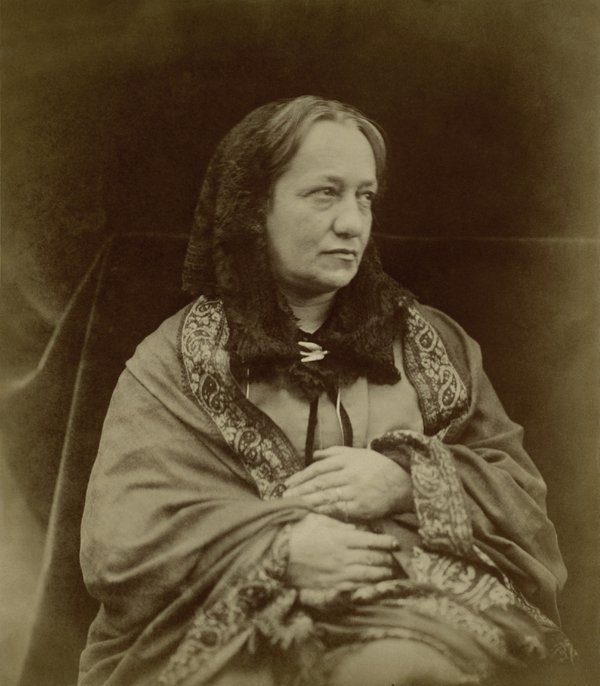 Henry Herschel Hay Cameron, Julia Margaret Cameron, 1870, The Metropolitan Museum of Art, New York: Harris Brisbane Dick Fund, 1941.
After her marriage to Charles Hay Cameron, reformer of law and education, the couple moved to England where Julia Margaret joined some of her sisters. Her sister Sara Prinsep presided over a literary and artistic salon at Kensington’s Little Holland House. It was at this salon that Cameron was introduced to some of Britain’s key artistic figures including William Holman Hunt, John Everett Millais, Dante Gabriel Rossetti, Frederic Leighton, Alfred Tennyson, Robert Browning, Elizabeth Barrett Browning and William Makepeace Thakeray.
A short but productive career
At the age of 48 (1863), Cameron was given her first camera. It was a Christmas gift from her daughter and son-in-law and was intended to provide an enjoyable hobby to occupy her during quieter times. She immediately took to the art, allocating areas of her home for use as a studio and darkroom. She then began the long and arduous task of learning to use the complex sliding-box camera. After only one year, despite having little previous experience, she had progressed to a professional level, exhibiting and selling her work. In 1865 the South Kensington Museum (now the Victoria & Albert Museum) purchased 80 of her photographic prints, and in 1868 provided two rooms for her to use as a studio. She became the museum’s very first artist-in-residence.
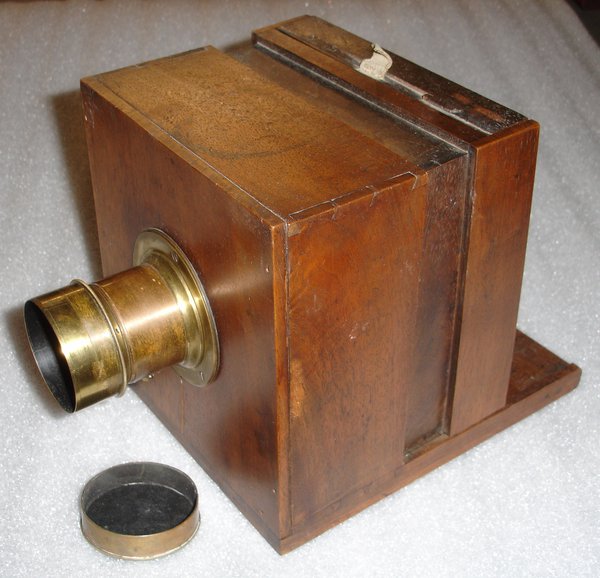 Sliding box camera, unknown maker, 1860, Discovery Museum, North East Museums, TWCMS : 2013.1273b
Creative and technical skills
Cameron’s works can generally be categorised into three genres: stately portraits of men, ethereal portraits of women, and illustrative allegorical scenes based on biblical and other historical literature. Similarly to the other Pre-Raphaelite artists, she also found inspiration from contemporary literary sources including Alfred Tennyson, Henry Taylor, Christina Rossetti, Robert Browning and George Eliot.
/https://s3-eu-west-1.amazonaws.com/atwam-images-files/production/images/content/twmuseums/2026-10/1165401.jpg "A sepia photograph of three children standing or seated in front of a dark background. They are wearing historical costumes. The child in the centre is holding a lute or similar instrument.") Julia Margaret Cameron, A Minstrel Group, 1867.
Julia Margaret Cameron, A Minstrel Group, 1867. Although her skills were recognised by the Victoria & Albert Museum early in her career, many contemporary critics considered her work to be rudimentary and amateurish. Her works often retained imperfections such as scratches, soft focus and fingerprints. Many photographers would have considered these errors, but they suited the nostalgic, ethereal nature of Cameron’s work. They also aligned with the Pre-Raphaelite belief in realism and ‘truth to nature’, that imperfection should not be withheld from art.
Cameron was also credited with creating the first close-up photographic portraits, which she felt made for a more dramatic and emotional image. She wrote to Henry Cole, Director of the South Kensington Museum, about her new technique which she expected to ‘electrify you with delight and startle the world.’ She made sure to confirm that they taken from life and not enlarged images.
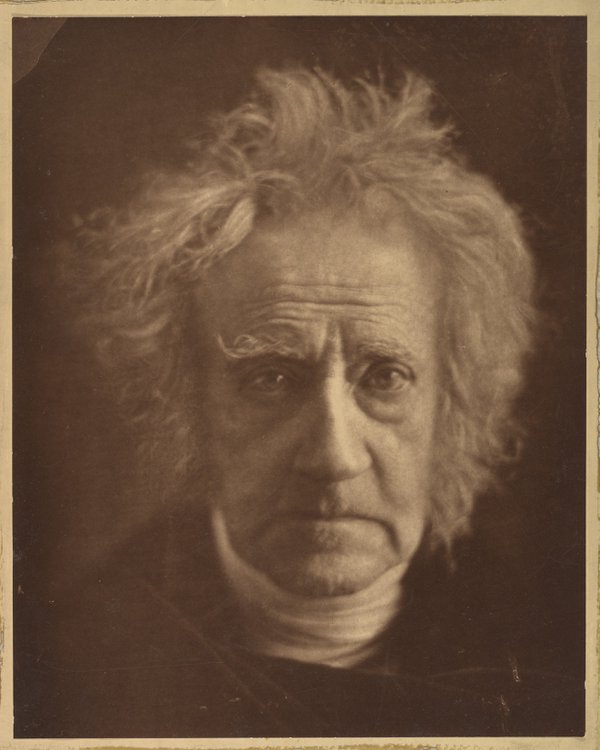 Julia Margaret Cameron, Sir John Herschel, 1867, The Metropolitan Museum of Art, New York: Robert O. Dougan Collection, Gift of Warner Communications Inc., 1981.
Like Dante Gabriel Rossetti and Elizabeth Siddall, Cameron was a poet as well as a visual artist. She started her own literary salon in the seaside village of Freshwater, Isle of Wight, and her poem ‘On a Portrait’ was published in an 1876 edition of the Macmillan Magazine.
Pre-Raphaelite ideals
Cameron was born into a financially stable family; her father worked for the East India Company. It’s likely that some of her success can be attributed to her standing in society and friendships with highly respected individuals such as Tennyson. However, her success can also be attributed to her attitude towards her work. She was one of the first photographers to truly see the medium as an expression of fine art. Similarly to other Pre-Raphaelite artists such as William Morris and Edward Coley Burne-Jones, she acknowledged the artistic and technical skill required for art forms that had previously been considered lower crafts.
Although Julia Margaret Cameron was not a member of the original Pre-Raphaelite Brotherhood, she certainly shared many of their ideals. We have already mentioned her commitment to ‘truth to nature’ and her interest in poetry, but she also shared their pre-occupation with beauty and held a similar view of the ideal feminine aesthetic; a long, elegant neck, flowing locks of hair and melancholy grace. She also shared their fascination with medieval and renaissance culture.
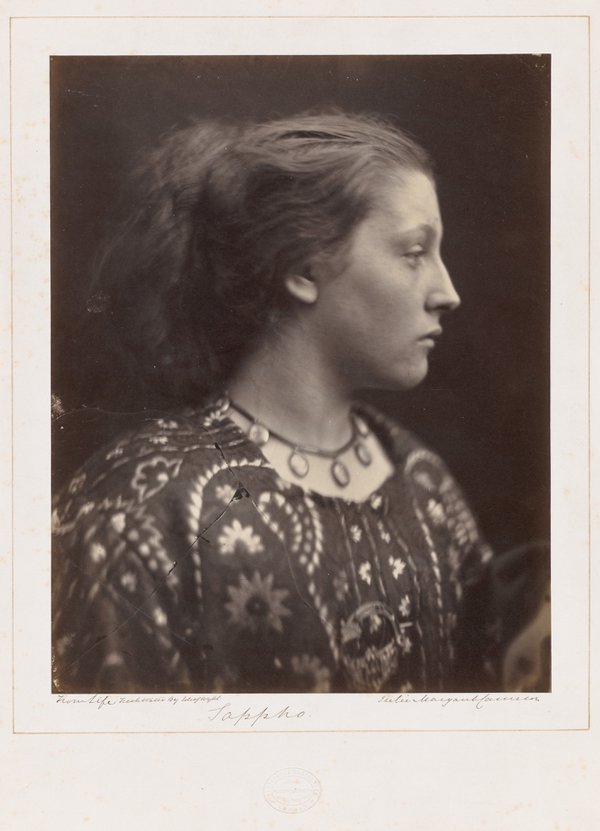 Julia Margaret Cameron, Sappho, 1865, The Metropolitan Museum of Art, New York: Harris Brisbane Dick Fund, 1941.
Her final large-scale project was to create illustrative images for her neighbour, Alfred Tennyson’s, epic volume of Arthurian legend, Idylls of the King, a work that was also a source of inspiration for Pre-Raphaelite artist Arthur Hughes.
In 1873 Cameron and her husband relocated to Ceylon to be closer to their sons and to provide a more suitable climate for Charles’s health. Although Julia Margaret’s photography equipment was some of the only personal items they took with them when they moved, her photographic output significantly reduced. It is thought that the warmer weather may have made it more difficult to work with the complex equipment.
Today, examples of Cameron’s work can be found in several public collections including The Bodleian Library and National Galleries of Scotland, with a large collection of her work held by The Victoria & Albert Museum.
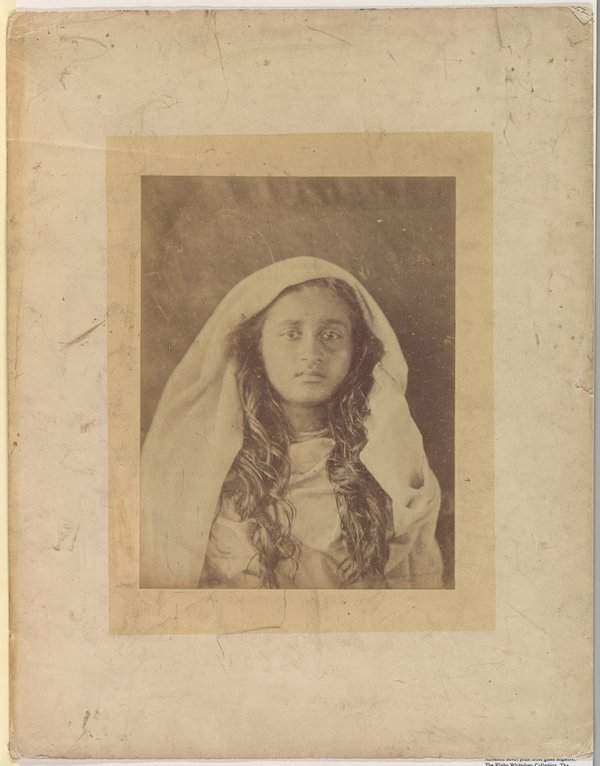 Julia Margaret Cameron, Ceylonese Woman, 1875–79, The Metropolitan Museum of Art, New York: The Elisha Whittelsey Collection, The Elisha Whittelsey Fund, 1969.



/https://s3-eu-west-1.amazonaws.com/atwam-images-files/production/images/content/twmuseums/2026-10/1165395.jpg)
/https://s3-eu-west-1.amazonaws.com/atwam-images-files/production/images/content/twmuseums/2026-10/1165398.jpg)
:watermark(https://www.northeastmuseums.org.uk/text-image-gen/Courtesy+National+Gallery+of+Art+Washington,0,0,0)/https://s3-eu-west-1.amazonaws.com/atwam-images-files/production/images/content/twmuseums/2026-10/1165401.jpg)
/https://s3-eu-west-1.amazonaws.com/atwam-images-files/production/images/content/twmuseums/2026-10/1165403.jpg)
/https://s3-eu-west-1.amazonaws.com/atwam-images-files/production/images/content/twmuseums/2026-10/1165405.jpg)