28 October 1865 - 12 December 1930
The world's first Black professional footballer changed the game. Shaun Campbell explores his remarkable legacy and the fight for greater representation.
28 October 1865 - 12 December 1930
The world's first Black professional footballer changed the game. Shaun Campbell explores his remarkable legacy and the fight for greater representation.
St James' Park
In the early 1880s, Arthur came to the UK to train as a missionary, ending up at Cleveland College in Darlington.
He soon became interested in sport, leaving the church to become a footballer. He played as a goalkeeper for Darlington, Newcastle and District (a pre-cursor to Newcastle United) and Preston North End before becoming the world’s first black professional footballer at Rotherham Town. At Sheffield United, his First Division appearance against Sunderland made him the world’s first black player to play in the top flight. Towards the end of his career, Arthur played for Stalybridge Rovers and Ashton North End.
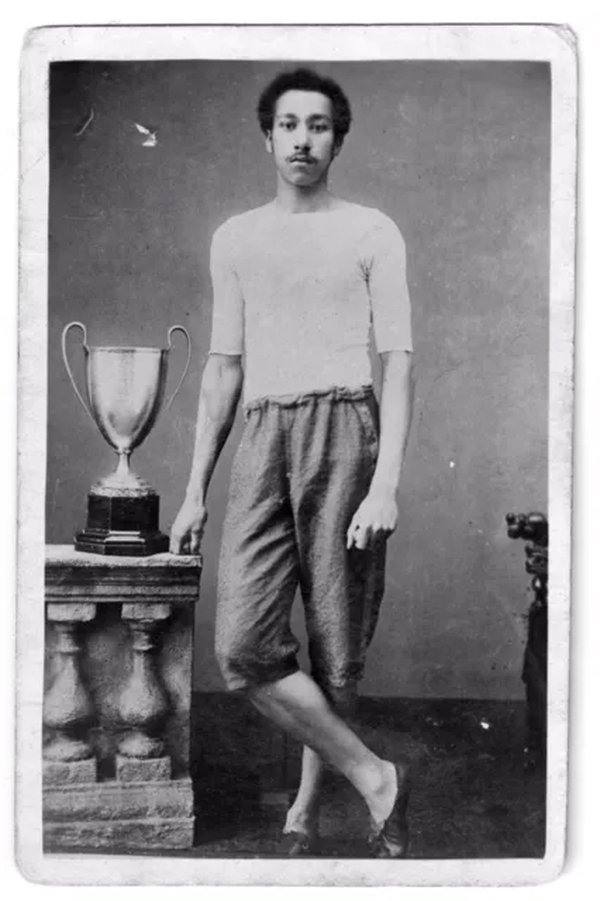
Outside of football, Arthur was a talented cricketer and rugby player. He competed in cycling and became the world’s fastest man on 3 July 1886, having sprinted 100 yards in 10 seconds in authentic championship conditions at Stamford Bridge, London.
Arthur died penniless in 1930, at the Springwell Sanatorium, near Doncaster, where he had been living his final years, as a miner, tobacconist, and pub landlord. He was buried in an unmarked grave in Edlington Cemetery and his story was forgotten until the late 1990s.
In this interview, Shaun Campbell, founder of the Arthur Wharton Foundation sits down with us to discuss racism and black representation in football over the last 160+ years.
Where this story leads next
Sport has long been a platform for change. Next, discover why Muhammad Ali's visit to South Shields became part of local history. Invited to support local boxing clubs, he toured the town, met huge crowds, visited the mosque and left lasting memories.
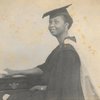
From sport to medicine, discover another remarkable Black pioneer with deep ties to the North East. Dr Irene Ighodaro studied medicine in Newcastle and became the first woman from Sierra Leone to qualify as a doctor. Her pioneering work in healthcare, women's rights and public health left a lasting legacy in Britain and Nigeria.
/https://s3-eu-west-1.amazonaws.com/atwam-images-files/production/images/content/twmuseums/2026-08/761295.jpg)