The 'Big E'
The iconic 'Big E' returns to Northumberland.
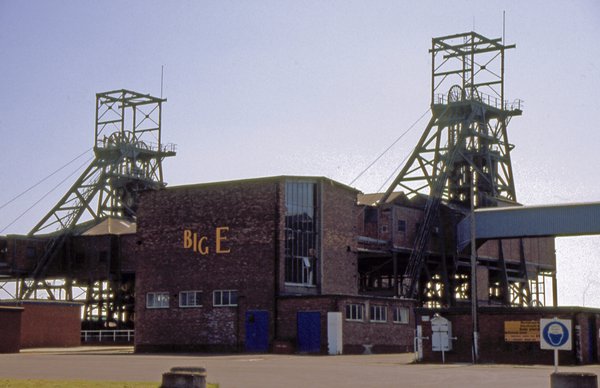
By popular community request, the famous sign from Ellington Colliery has returned to Northumberland – its first appearance in the region for decades.
Originally created in the 1980s, the ‘Big E’ became a much-loved emblem of pride at the colliery – a reminder of the people, industry and communities that shaped south-east Northumberland.
Now on display here at Woodhorn Museum the sign is proudly hung on our banner ramp as part of the 'Ellington Colliery: End of an Era' collection.
We are delighted to welcome the sign as part of a five-year loan from Beamish Museum, and hope it will help reconnect former miners, their families and local communities with a powerful symbol of Ellington’s mining heritage
Ellington Colliery: End of an Era
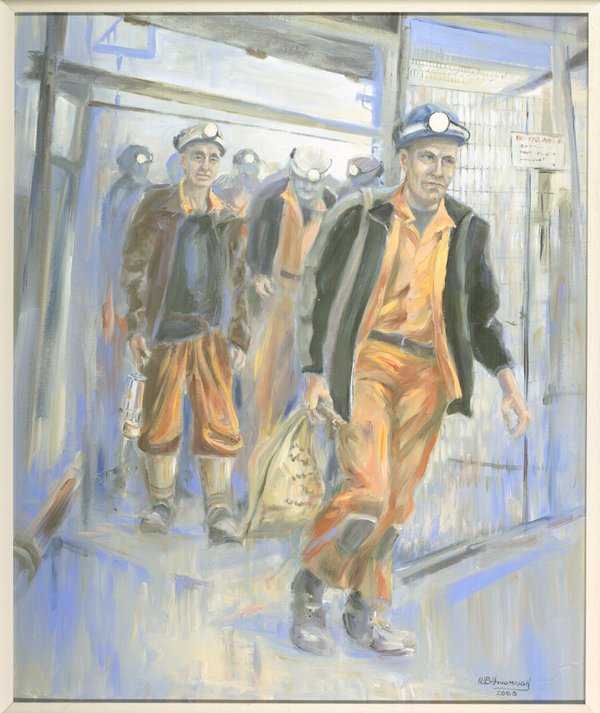
Twenty years ago, Ellington Colliery closed, ending over 200 years of coal mining in the North East. Our new displays, Ellington Colliery: End of an Era, celebrate the men, communities, and stories that made 'The Big E' such an important part of the region.
From the underground railway network that carried miners to the coalfaces, to the pit ponies used until 1994, and the final shift on 12 April 2005 — these displays bring it all to life through photographs, personal objects, and the memories of those who worked there.
Co-curated by our dedicated volunteers, the displays feature items donated at the mine’s closure, including the full set of clothing and equipment from three of the men who worked the very last shift, and photographs taken by Mik Critchlow of the men as they walked out of the pit for the very last time.
Woodhorn Museum would like to thank Collections Volunteers Anne Lytollis, Catherine Wakefield, Hazel Dunn, John Chilton-Graham, Philip Hood and Ray Malecki for developing these displays