Follow the Banner
Pride woven in every thread
There isn’t a sight more stirring than a host of miners’ banners being marched in a street parade accompanied by a brass band - whether at the annual Northumberland Miners’ Picnic, or a funeral service.
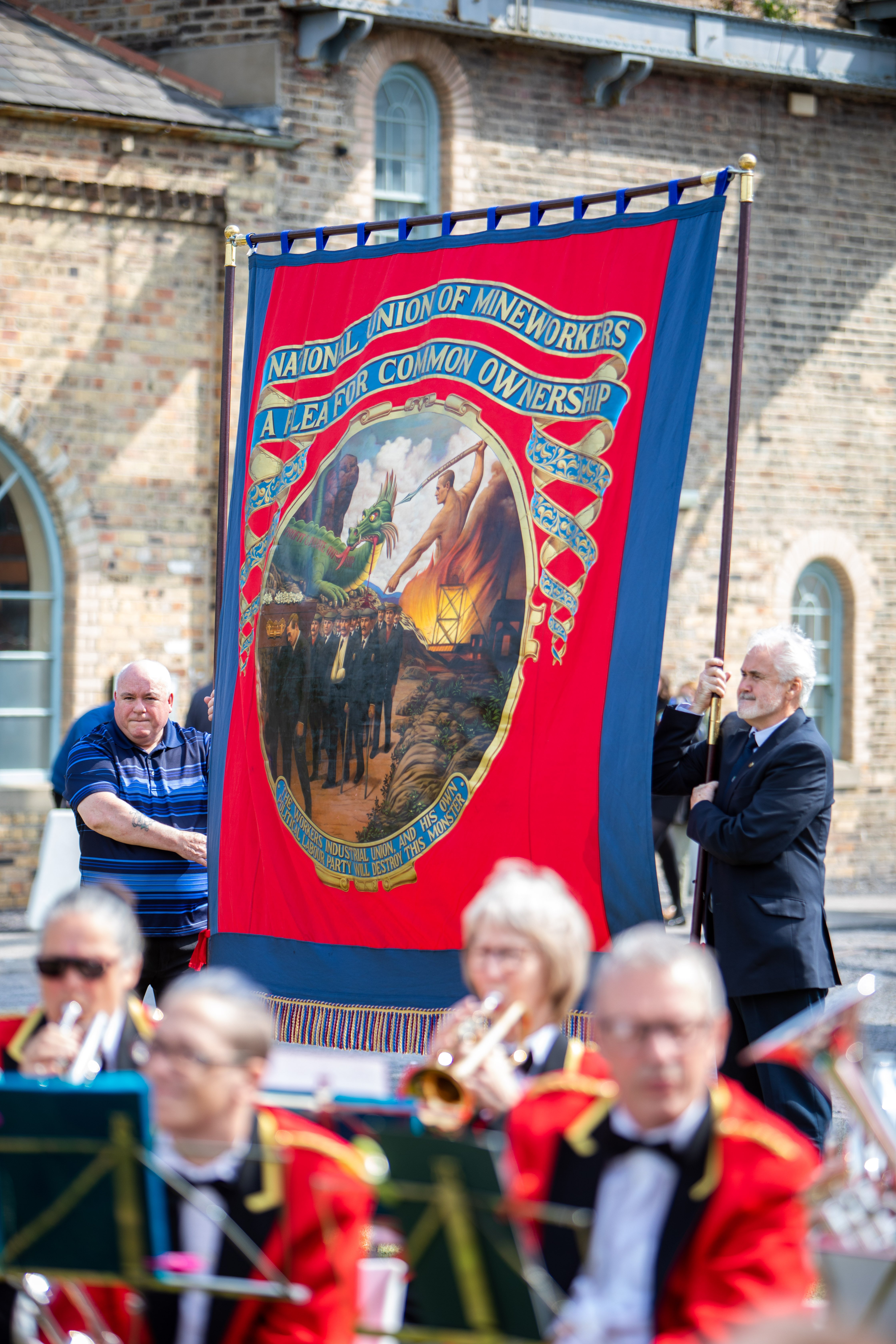
The colliery banner reflects the miner’s pride in his work and his community, providing that community with a connecting thread to past struggles and a sense of tradition, strength, purpose and hope. The story of the pit village community has been woven into the banners over the years, the motifs and mottos changing to echo contemporary conditions and challenges. Early themes were the right to vote and the demand for regulation. Later banners called for better working conditions and terms of employment, and for nationalisation.
Early banners would often be homemade by local amateur artists and signwriters, but in time the banners came to be produced professionally, especially by the well-known firm George Tutill & Co, founded in 1837 and still in business today. Tutill based his factory in East London, close to a cheap, skilled (non-union) labour force descended from the Huguenot silk weavers who settled in Spitalfields and Bethnal Green. The firm specialised in the production of double-sided banners of brightly coloured woven silk, with hand-painted panels, scrolls and ornate lettering. The large central painted image was often surrounded by inset cameos depicting pioneers of the union, such as Keir Hardie, Clement Atlee, and A. J. Cook.
With the end of the deep coal mining industry in the 1990s, banner production in Northumberland ceased. Due to their fragile materials and frequent use very few have survived, though occasionally a banner will resurface, having been stored away and temporarily forgotten about by a new generation which has never gone down the pit.
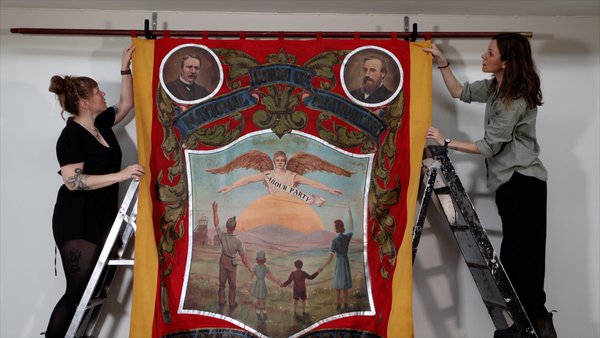
Woodhorn Museum looks after 18 of the original Northumberland colliery banners and displays four of them each year on a specially built banner ramp within the main museum building. The banners have had a long and often hard life on parade in all weathers, with surviving banners rescued from dusty attics or damp cellars, so they often arrive in our collections in a poor state of repair. While it is important that we continue to display them, doing so for long periods produces damage, the heavy oil paint weighing down the fragile silk causing weakness and even tears.
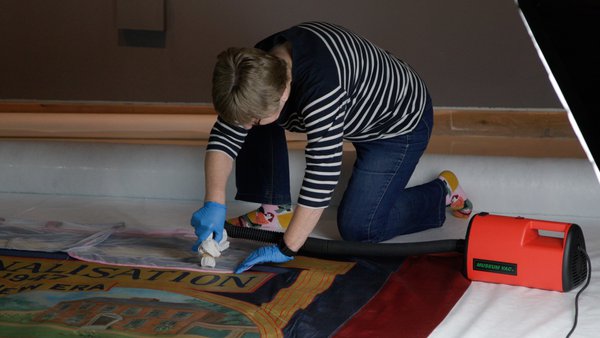
Caring for Northumberland’s mining heritage
Each of the banners is taken down from display after a year, to help with its conservation needs. Great care is taken during this process, as the slightest misalignment during rolling can also encourage cracking of the paint layer or damage to the silk. While on display it will have been subjected to light exposure and humidity, as well as dust, so, with the supervision of a professional textiles conservator, the banners are very gentle vacuumed, then inspected for damage before being carefully rolled up and placed in store to rest.
Where can I see these?
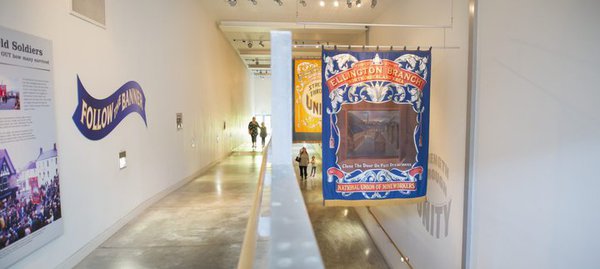
Come and see a mining community’s proudest possession with our display of colourful mining banners at Woodhorn. Click here for more information.