Our collections
Billy - the world's third oldest locomotive
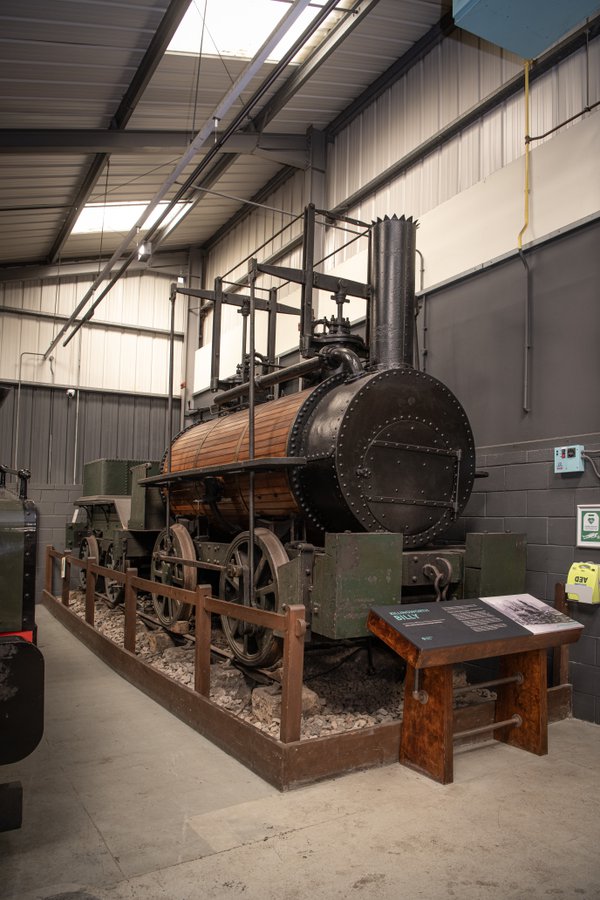
A recent archaeological survey carried out on Stephenson Steam Railway's star exhibit, Billy, reveals that the locomotive is even older than previously thought. The report, produced in March 2018 by early railway experts Michael Bailey and Peter Davidson, concludes that Billy was built in 1816, not 1826, and establishes the locomotive as the third oldest surviving locomotive in the world.
Billy was initially fabricated and assembled at Killingworth Colliery’s West Moor workshops under the supervision of George Stephenson, about four miles from Stephenson Steam Railway in North Shields. The engine was used to haul waggons carrying coal from Killingworth Colliery to the River Tyne. Although none of Billy’s surviving components can be traced back to 1816, it has features that, despite being later replacements, provide a clear footprint of the original; primarily it retains the same standard track gauge set by George Stephenson at that time (4ft 8½in), and also the distance between the two cylinders and the axles presents a unique identifier. Billy is now determined to be the world's oldest surviving standard gauge steam locomotive. Built thirteen years before the more famous Rocket, this was one of the most innovative transport systems of its day.
Early locomotives like Billy were called ‘travelling engines’ because they were mobile versions of the steam engines used at mines. George Stephenson built his first locomotive in 1814 at West Moor, near Killingworth, where he was a colliery engineer. It was similar to engines pioneered at Leeds in 1812 and tried near Newcastle the following year. Other locomotives were being built on Tyneside around this time, and Stephenson used his practical skills to combine the best ideas into his ‘Killingworth travelling engines’. Billy was one of the last of the type to be built.
A section of the line where Billy worked is preserved as the Bowes Railway at Springwell Village near Washington, Tyne and Wear.
Locomotive NTR No. 1 Ted Garrett JP, DL, MP
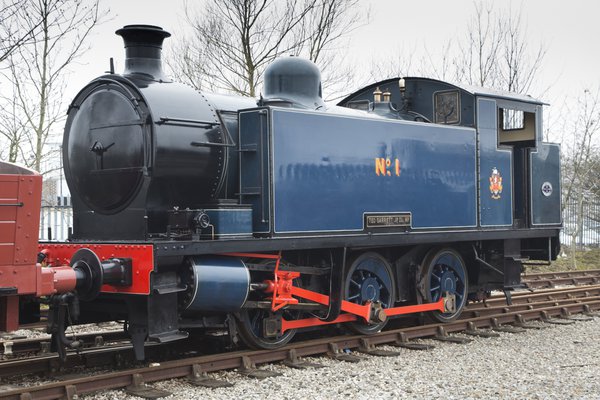
Several locomotives were built at the Forth Banks Works in Newcastle in the early 1950s for shunting at power stations. They were used to move coal wagons into a power station from nearby railway sidings. This was because the locomotives which brought heavy coal trains from the collieries were too large to use the tracks around power stations.
Locomotives at power stations had to move heavy loads over short distances, so they have small wheels. Larger-wheeled versions of the same type were built for longer journeys, for example around the collieries at Ashington, Backworth, Stanley and Consett.
NTR No. 1 was purchased for the museum in 1996, and in May 2000 it was named after Ted Garrett, who was the Member of Parliament for Wallsend between 1964 and 1992.
Blyth & Tyne Railway Locomotive Cab

Built in 1867, the Blyth & Tyne Railway Locomotive cab is the only surviving part of a Blyth & Tyne Railway locomotive. It was made in the Railway’s works at Percy Main, two miles south of this museum.
The cab was used on two different locomotives from 1867 until 1955, when it was preserved. This exhibit is on loan from the National Railway Museum.
Electric Motor Luggage Van No. 3267
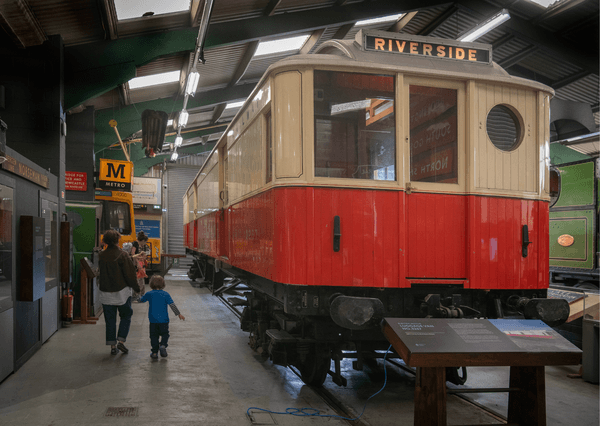
Local train services experienced fierce competition from electric street tramways in the early 1900s. To win back passengers the North Eastern Railway introduced a frequent service of fast electric trains between Newcastle and the Coast in 1904. It was the first time that electric trains had replaced steam trains on a main-line railway, and this exhibit, built in 1904 at York by the North Eastern Railway, is the only survivor of the original fleet of vehicles.
Luggage Vans were used for ‘sundries’ traffic. They ran at passenger train speeds, carrying parcels and other items which were too urgent, valuable or perishable for the goods trains of the time. They were powerful enough to haul several other vans. A ventilated compartment at one end was used to move boxed fish from Cullercoats and Tynemouth stations.
The original Luggage Vans remained in service until 1937, long after the passenger vehicles had been replaced. Their motors were removed and they were converted to spray antifreeze mixture onto the ‘third rail’, a live rail at the side of the track which supplied electricity to the trains.
This exhibit is on loan from the National Railway Museum.
Consett Iron Company Locomotive A No. 5
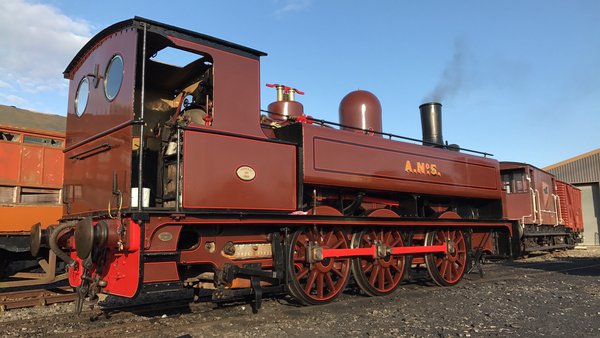
A No. 5 is the only working example of an innovative Robert Stephenson design patented in 1841, the ‘long-boiler’ locomotive. This improved efficiency without making the locomotive too long.
A short wheelbase was important in the 1840s so that locomotives could use the small turntables of the period to turn round at the end of each journey. However, short locomotives are prone to lurch from side to side at speed. They were soon confined to slower trains, but their ability to travel round sharp curves in collieries and iron works ensured that they remained popular in north east England.
The Consett Iron Company started using this type of locomotive in 1872, and bought its last one in 1941. As the largest engines in the company’s fleet they were known as the ‘A’ class.
A No. 5 was built in 1883 at Leeds by Kitson & Company and passed to the National Coal Board when the company’s pits were nationalised in 1947. When it was eventually pensioned off in 1968 the locomotive was a combination of parts from at least three of similar type.
Steam Locomotive No. 401 Thomas Burt
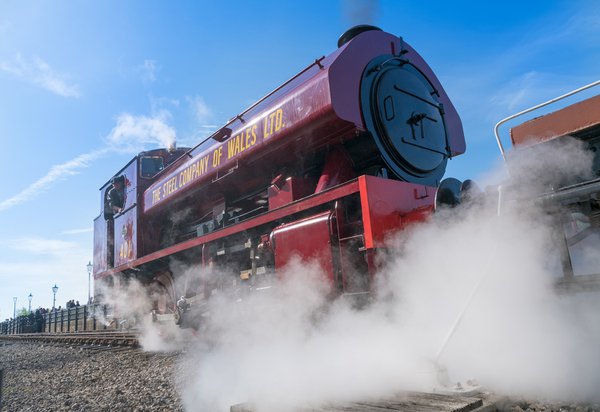
This locomotive was one of three built in 1951 at Stafford by W.G. Bagnall Ltd for the Steel Company of Wales to see if steam engines could be as effective as diesels. Steam engines were less expensive to buy, and coal was cheaper than oil fuel, but diesel locomotives could operate for much longer periods without major servicing.
Many advanced features were included in the design to reduce servicing time and increase reliability. The locomotives were able to work continuously for up to three weeks, with breaks only for loading coal and filling the water tank.
Also known as Vulcan, No. 401 worked at the Margam steel plant in South Wales until late in 1957. Although the design was working very well, the falling cost of oil relative to good quality coal meant that diesel locomotives had become much cheaper to use.
Still nearly as good as new, No. 401 left Wales for Birmingham to work for a few years at the Austin car factory at Longbridge, where there was an internal railway system. After a period of running at the West Somerset heritage railway, the engine was acquired by Tyne and Wear Archives and Museums (now North East Museums) for Stephenson Steam Railway Museum in 1986, where it remained in regular use until December 2008. Problems with its firebox led to the locomotive being placed on static display within the museum. A six year restoration project saw No. 401 return to service, hauling passenger carriages, during Easter 2019.
This locomotive is named after Thomas Burt, a miners’ leader from Northumberland who in 1874 became the first working man to be elected as an MP.
Locomotive Ashington No. 5: Jackie Milburn
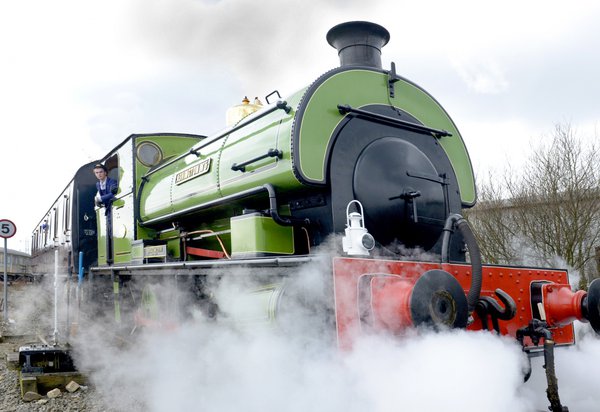
This steam locomotive was built for the Ashington Coal Company in Northumberland in 1939 by Peckett & Sons, Bristol. The Ashington Coal Company had one of Britain’s most extensive colliery railways. For 30 years it hauled wagons of coal from the company’s pits, and also passenger trains for the miners.
By 1970 diesel locomotives were replacing steam, and Ashington No.5 was sold by the National Coal Board to the North Norfolk Railway. In 1991 it was acquired by Stephenson Steam Railway and was given the additional name of Jackie Milburn in honour of the great Newcastle United footballer who grew up in Ashington.
It is known as a ‘saddle tank’ locomotive, because it carries water in a curved tank which fits over the top of the boiler. Its coal supply is in a bunker behind the cab.
Diesel Locomotive No. 10
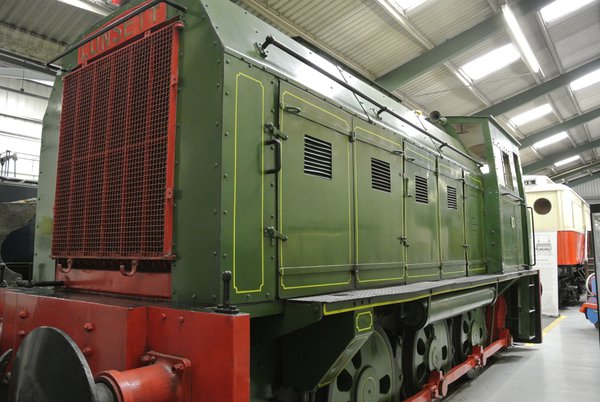
This locomotive was one of two built at the Consett steelworks in County Durham in 1958, to move very heavy loads, including large wagons of molten metal.
The Consett works’ first diesel locomotives arrived in 1947, and several types were bought from specialist locomotive builders. None of them was suitable for the heaviest duties in the steelworks, so the company decided to build two locomotives in its own workshops. Since the earliest ‘travelling engines’ of George Stephenson, colliery and industrial railways in the north east had often built their own locomotives. No. 10 was to be the last of these.
The design is based on engines built by the Hunslet Engine Company of Leeds. Only the power unit and wheels were bought in; everything else was either recycled from old locomotives or made in the workshops. No. 10 is extremely sturdily built – look at the thickness of the red-painted steel buffer beams at front and rear.
No. 10 was donated to Tyne & Wear Museums (now North East Museums) by the British Steel Corporation in 1976. The Consett steelworks closed down in 1980.
Sentinel No. 4
Built by Sentinel in 1953, this locomotive began its working life at Totternhoe Quarries in Dunstable, where it operated as No. 1 for Rugby Portland Cement Co. Ltd. In 1964, it was transferred to the company’s New Bilton Works in Rugby, with a brief loan to Southam Works in Warwickshire in early 1966 before returning to New Bilton a few months later. In 1967, the locomotive was sold to Thomas Hill Ltd of Killamarsh, Yorkshire, and the following year passed to R.Y. Pickering & Co. Ltd, a wagon manufacturer in Wishaw, Lanarkshire.
Renumbered No. 4, it was used to shunt a variety of wagons, including 100-ton bogie oil tankers, and continued in service following the company’s later change of name to Norbrit-Pickering Ltd. In July 1979, the locomotive moved to the Tanfield Railway, arriving alongside RW Hawthorn Works No. 2009. In 2024, it was privately purchased by a member of the North Tyneside Steam Railway Assosiation, where it is now awaiting a much-needed overhaul and a new chapter in its working life.
Electric Locomotive No. E4
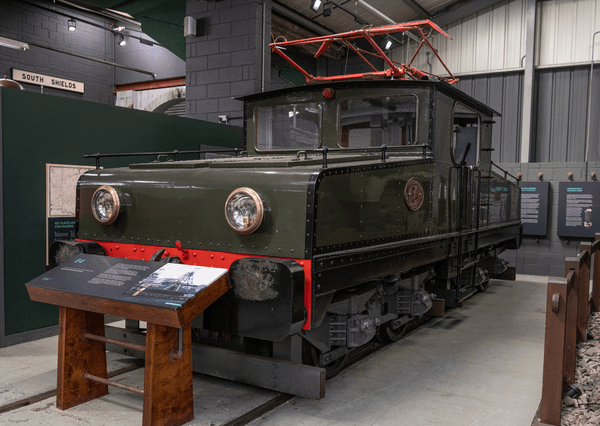
This locomotive, built in 1909 at Berlin by Siemens Schuckert, was part of a pioneering investment in the latest electric technology for coal mining by the Harton Coal Company of South Shields. The company’s pits became the most up-to-date in Britain, thanks to a partnership with Siemens, a German company which had a reputation for reliable mining equipment powered by electricity.
E4 was one of nine purchased from Siemens by the company, which owned several collieries in and around South Shields. It remained in service for 73 years hauling heavy trains of coal from the pits to the river Tyne for shipment.
During its working life E4 received electricity from overhead wires, in just the same way as the Metro. Today, its power comes from a large rechargeable battery in the nearby wagon. The locomotive has four 35kW electric motors, which means that E4 is about twice as powerful as a modern family car.
Acquired by Tyne & Wear Museums (now North East Museums) in 1982, E4 has been restored to full working order and its original appearance.
Tyne and Wear Metrocar 4001
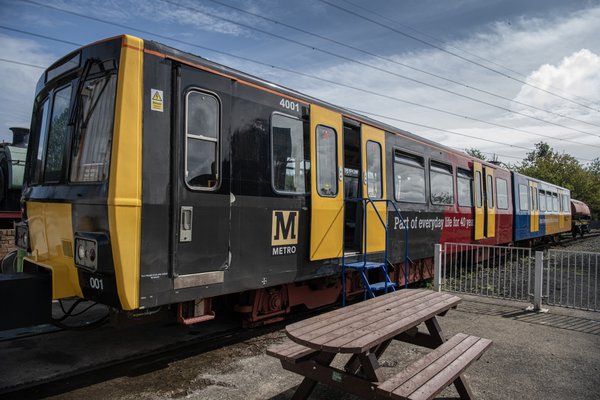
Tyne and Wear Metrocar 4001 is preserved as a static exhibit at the Stephenson Steam Railway Museum. Donated by Nexus, the operator of the Tyne and Wear Metro, on 11 September 2025, the vehicle has become an important addition to the railway’s collection. Its presence complements the railway’s steam and industrial heritage, while also telling the story of the region’s more recent transport history.
Built in 1975 by Metro-Cammell in Birmingham, Metrocars 4001 and 4002 formed the first pair of vehicles constructed for the new Tyne and Wear Metro system, which would open to passengers in 1980. The two-car articulated units were 27.8 metres long and powered by four 185 kW traction motors, drawing power from the Metro’s 1,500V DC overhead electrification system. Designed for urban passenger transport, each unit provided seating for around 64 passengers, with additional capacity for standing.
The railway occupies part of the former test track constructed in the late 1970s for the new system, where the first Metrocars were put through their paces during development and testing. The arrival of 4001 therefore brings a significant piece of this history back to the place where it first operated, reconnecting the vehicle with the railway that played a role in its early development.
Although no longer in passenger service, Metrocar 4001 represents a significant chapter in the development of public transport in Tyne and Wear. Its preservation gives visitors the opportunity to see at close hand the design and construction of a vehicle purpose-built for the region and to explore how rail transport has evolved over generations – from early steam locomotives and industrial railways to the modern Metro system.
No. 69
South Hetton No. 69 is an Austerity Class locomotive built by Hunslet of Leeds in 1953. Alongside a fleet of similar Austerity locomotives and several much older veteran engines, No. 69 was used to handle coal traffic across the South Hetton, Hawthorn, Murton and Seaham Colliery System. In 1963, it returned to Hunslet’s works for a major overhaul and was fitted with the Hunslet Patent Underfeed Stoker, a system designed to allow the locomotive to burn lower-grade coal. A fibreglass chimney cowl was fitted to identify the modification, although the stoker system was subsequently removed; No. 69, however, retained its distinctive chimney cowl. The locomotive continued working into the early 1970s, when it became a standby engine for the collieries’ new diesel locomotives.
South Hetton was the last location in the North East to see National Coal Board steam in regular use, with the colliery railway finally switching entirely to diesel in 1976. In 1977, No. 69 was preserved and moved to the Yorkshire Dales Railway, now the Embsay & Bolton Abbey Steam Railway, where it was put to work almost immediately hauling some of the line’s earliest passenger trains. The locomotive was withdrawn from service in 1985 for mechanical work and subsequently spent several decades resting in the siding alongside the running line at Embsay, during which time some dismantling work was carried out. In August 2020, No. 69 made its most recent journey to the railway, where it arrived under the care of a new owner.
The locomotive is now undergoing overhaul, with the aim of returning this important piece of North East industrial railway history to working order.
Blyth Harbour Commission 2 (Pony)
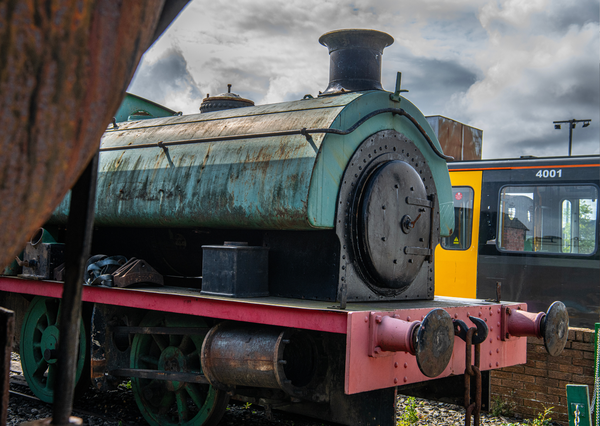
Built by Hawthorn Leslie in 1912, this locomotive began its working life with the Blyth Harbour Commission, where it operated as BHC No. 2. In 1971, it was sold to the Yorkshire Dales Railway at Embsay, now the Embsay & Bolton Abbey Steam Railway, for restoration and was renamed Pony.
The locomotive later moved to the Heritage Centre at County School, a preservation site originally managed by the Great Eastern Railway. The site subsequently became an important base for the Mid-Norfolk Railway, and following a major rebuild, the locomotive returned to service in 1994. When the County School project closed in 1996, the locomotive was sold into private ownership.
Two years later, in 1998, it was acquired by the Chatham Historic Dockyard Trust, moved to Chatham and renamed Achilles. It remained in operation there until 2004, when its boiler certificate expired, bringing its working career to an end. In February 2022, the locomotive was moved to Derbyshire to begin an overhaul. By 2024, it had changed hands once again and joined the collection at Stephenson Steam Railway, where it will now be restored by members of the North Tyneside Steam Railway Association.
Diesel Locomotives
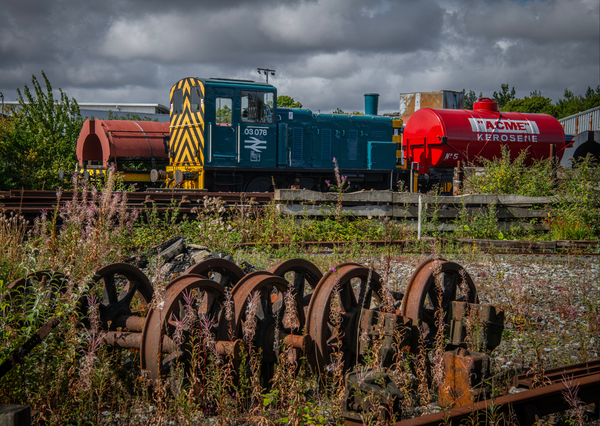
No. 03078
As Britain’s railways were modernised, steam shunting locomotives were increasingly replaced by diesel engines, which were quicker to prepare and could be operated by a single person. No. 03078 is a Class 03 diesel shunter, powered by a Gardner 8L3 engine and five-speed gearbox. Built at Doncaster Works, it entered service on Christmas Eve 1959, initially working from Darlington, Thornaby and West Hartlepool before moving to Gateshead in 1968. Its duties included shunting carriages, station pilot work and goods yard operations across the region.
Withdrawn from British Rail service as the need for dedicated shunters declined, No. 03078 was sold to North Tyneside Council in 1988. Today, it remains in regular use, shunting stock and occasionally hauling passenger services.
No. 08915
As Britain’s railways were modernised, steam shunting locomotives were increasingly replaced by faster, more efficient diesel engines. Class 03 shunters were designed for duties such as moving wagons and carriages around yards and stations. Powered by a Gardner 8L3 diesel engine and five-speed gearbox, No. 03078 was built at Doncaster Works and entered service on Christmas Eve 1959. After working from Darlington, Thornaby and West Hartlepool, it moved to Gateshead in 1968, where it remained for the rest of its British Rail career, undertaking shunting and station pilot duties across the region.
Withdrawn from service as dieselisation reduced the need for dedicated shunters, No. 03078 was sold to North Tyneside Council in 1988 to assist with the construction of the new Stephenson Steam Railway. Today, it remains in regular use at the railway, shunting stock and occasionally hauling passenger services.
No. 10
Consett Iron Company No. 10 was one of two locomotives built in-house at the company’s Templetown Works in Consett. Heavily influenced by the Hunslet diesel locomotives already in use, the engines were designed to withstand the demanding conditions of the blast furnaces and the movement of molten steel.
No. 10 was donated to Tyne & Wear Museums (now North East Museums) in 1976 and initially served as an air compressor while A.No. 5 was being restored at Monkwearmouth Station Museum. When the collection moved to Middle Engine Lane, No. 10 was used to haul stock from the unloading point at West Allotment.
Rolling Stock
MK1 Suburban Brake Coach, No.43172
Builder: Doncaster Works Built in: 1954 Worked for: British Railways Current Status: Operational
MK1 Suburban Composite Lavatory, No.43010
Builder: Doncaster Works Built in: 1954 Worked for: British Railways Current Status: Operational
MK1 Suburban Second Lavatory Open, No.48015
Builder: Doncaster Works Built in: 1955 Worked for: British Railways Current Status: Operational
Lambton Plate Layers Van, No.21
Builder: Unknown Built in: Unknown Current Status: Operational
12 ton 4-wheeled Ventilated Van, No.B774658
Builder: BR Wolverton Built in: 1957 Current Status: Operational
24 ton 4-wheeled Ballast Hopper Dogfish, No.DB992993
Builder: Metro Cammell Built in: 1956 Current Status: Operational
51 ton 8-wheel bogie Flat Salmon, No.DB9966297
Builder: Head Wrightson Built in: 1953 Current Status: Operational
4-wheeled Flat Wagon TTP, original number unknown (referred to as Matchwagon)
Builder: Charles Roberts Built in: Unknown Current Status: Operational, restored to represent BR Matchwagon/Barrier Vehicle
4-wheeled Flat Wagon, No.ZV733728
Builder: Unknown Built in: Unknown Current Status: Undergoing Restoration
20 ton 4-wheeled Tank Wagon No.3
Builder: Gloucester Railway Carriage and Wagon Company Built in: 1939 Current Status: Operational
20 ton 4-wheeled Tank Wagon No.4
Builder: Charles Roberts Built in: 1950 Current Status: Operational
20 ton 4-wheeled British Petroleum Ltd Tank Wagon, No.A5776
Builder: Unknown Built in: Unknown Current Status: Operational
BR 21 ton Coal Hopper, No.B415776
Builder: Shildon Built in: 1954 Current Status: Operational
NCB 21 ton Coal Hopper, No.722
Builder: Hurst Nelson Built in: 1958 Current Status: Operational
NCB 21 ton Coal Hopper, No.6555
Builder: Hurst Nelson Built in: 1956 Current Status: Operational
LNER 4-wheel PMVY (converted to crane runner), No.DE231051
Builder: Stratford Built in: 1927 Current Status: Operational
10 ton 6-wheel Diesel Mechanical Crane, No.DRS81140
Builder: Smith Rodley Built in: 1957 Current Status: Awaiting Overhaul
4-wheel 4 plank Open Wagon, No.136103
Builder: Unknown Built in: 1927 Current Status: Operational
20 ton 4-wheel Brake Van, No.B951920
Builder: BR Faverdale Built in: 1953 Current Status: Operational
Donations to the collection or bringing in items for identification
Please get in touch with us (via phone, email or letter) before bringing in your items to describe what you would like to offer, or what you need help with identifying. Send us a photograph if possible.
We’ll reply letting you know if your offer is something we can accept, if we need more information, if we cannot accept your offer or to arrange a time for you to bring your item in.
There are a variety of reasons that we may not be able to take your donation. We have a Collections Development Policy that we must use when making a decision.
Please note that unless there are compelling and legitimate reasons, hazardous objects and substances will not be accepted.