
Petit Bras Art and Objects
Put cool water in a bowl and move your hands slowly through it, then quickly to make splashes. Imagine sitting in a boat, and with your hands still in the water, gently sway your body.
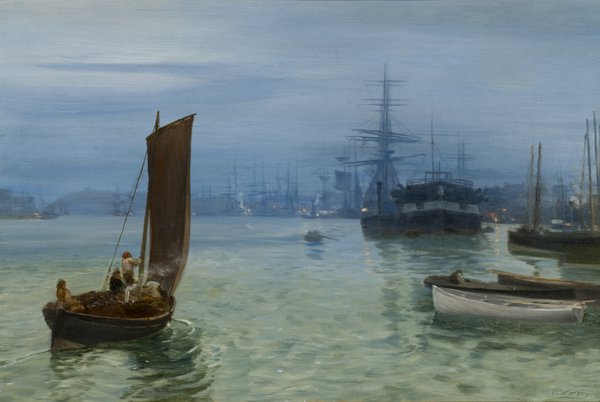
Painting, oil on canvas, entitled 'The Last Boat In', by the artist Charles Napier Hemy
In this painting we see a small fishing boat gently slipping towards the quayside as dusk falls on the River Tyne at North Shields. The calm water, the stillness of the other boats and the pale blues, green, and yellow tones of the sky present a quiet and relaxing scene. Bring this fishing boat to life by running your hands over some wood, maybe wood flooring, a wood ruler, or the back of a wooden spoon to feel the hull of the boat, worn away by time and the sea. Flap some fabric in the air, a pillowcase, dish towel, or even a t-shirt to experience the flapping of the canvas sails in the wind. Finally, steer your boat into the harbour by pulling on some string, rope, or even a belt.
Pretend you are painting and the air is your canvas. What kind of picture are you painting? What colours would you use? Will you paint a large artwork or small? Notice how it feels to move your arms.
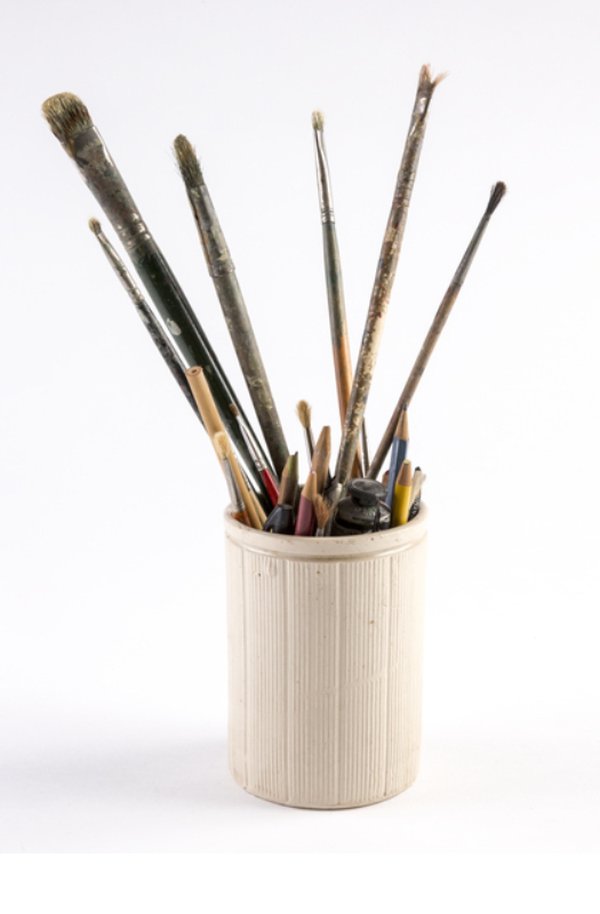
Ceramic jar containing brushes and pencils, 1 tube of oil paints, 11 paint brushes, 14 pencils, 1 piece of bamboo, 2 felt-tip pens, 1 parker pen, 1 silver charcoal pen, 1 teaspoon, 1 pastel, 1 rubber, 3 ink nibs, 1 paper clip and 1 pastel smudge, used by Catherine Cookson.
Create your own artist’s studio area and bring these artists tools to life. Put some cloth on a table. With help from your adult, go on a scavenger hunt and find some pens, felt-tips, pencils, paintbrushes, a rubber, paint, and a paper clip. If you do not have these objects, you can find things that look or feel like them. Can you find a container to put them in? Hold each object in your hands and feel the different textures. The artist materials in this picture are made from clay, pottery, wood, metal, plastic and oil. Can you find these materials in your home and explore them with all your senses?
Go outside and pay attention to what you can you see, feel, hear, and smell. Slowly turn clockwise and repeat this four times. Are there any differences? Pretend to be a compass.
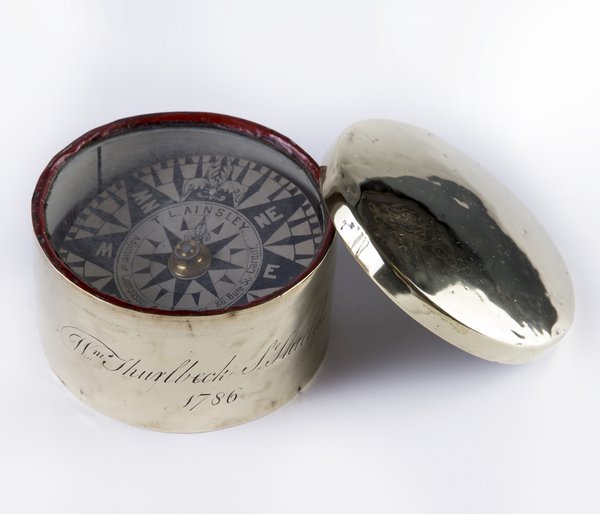
Brass coble compass inscribed “Wm Thurlbeck, So Shields, 1786” A compass is an navigational tool used to show direction. It’s composed of a magnetised needle that aligns itself with the earth’s magnetic field to point north. Usually, a diagram, called a compass rose, shows the directions north, south, east, and west on the compass face as abbreviated initials.
This compass has a T.L. Ainsley ("Adjuster of compasses in iron ships, 86 Bute St., Cardiff") paper compass card, however the original card is said to be underneath. Inside is painted white, with a black lubber line to line the compass up with the bow of the coble. There is a brass lift-off lid to protect the glass top.
A coble is a type of flat bottomed, high bowed, open traditional fishing boat which developed on the Northeast coast of England. The special shape of the boat was designed to cope with launching from and landing upon shallow, sandy beaches; an advantage in this part of the coast where the wide bays and inlets provided little shelter from stormy weather.
Bring this compass to life. Find a metal object to feel the coolness of the silver casing that houses the compass. Feel the bottom of a drinking glass to sense the curvature of the glass protective top. If you have a game with a spinner, touch the dial and feel the movement to get an idea of what the compass would feel like in motion.
Get a cardboard tube or cup your hands around your mouth. Imagine you are a boat coming into harbour. Make a tooting sound to let everyone know you are coming. How does your breath feel on your hands?
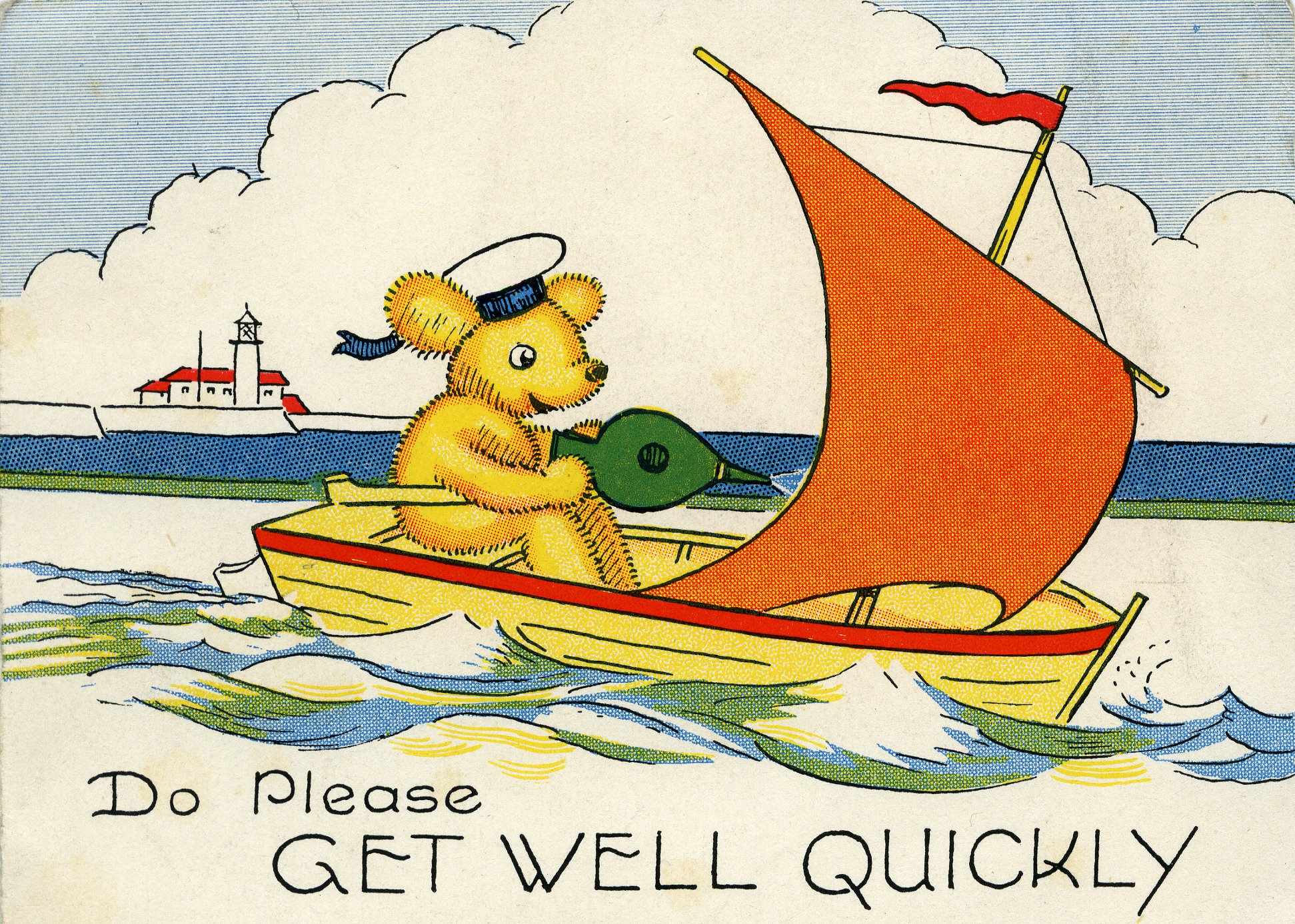
Get well soon greeting card, mid 20th century. The card features an illustration of a teddy bear wearing a white sailors cap with blue ribbon in a small wooden sailing boat. The bear is using a pair of bellows to blow air into the sail to make the boat move across the choppy water. There is a lighthouse in the distance. 'Do please get well quickly' appears on the front.
Bring this scene to life by sitting in a bath with your favourite cuddly toy. Can you make soap bubbles in the water to recreate the choppy water foam? Use a washcloth to make your sail and wave it in the air, while you enjoy your sailing adventure.