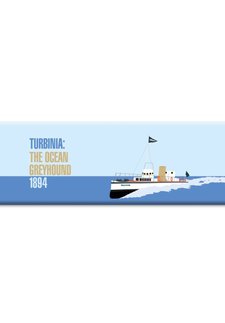
Turbinia Magnet
£3.50
Magnet depicting Turbinia, the Ocean Greyhound

Managed by North East Museums on behalf of Newcastle City Council
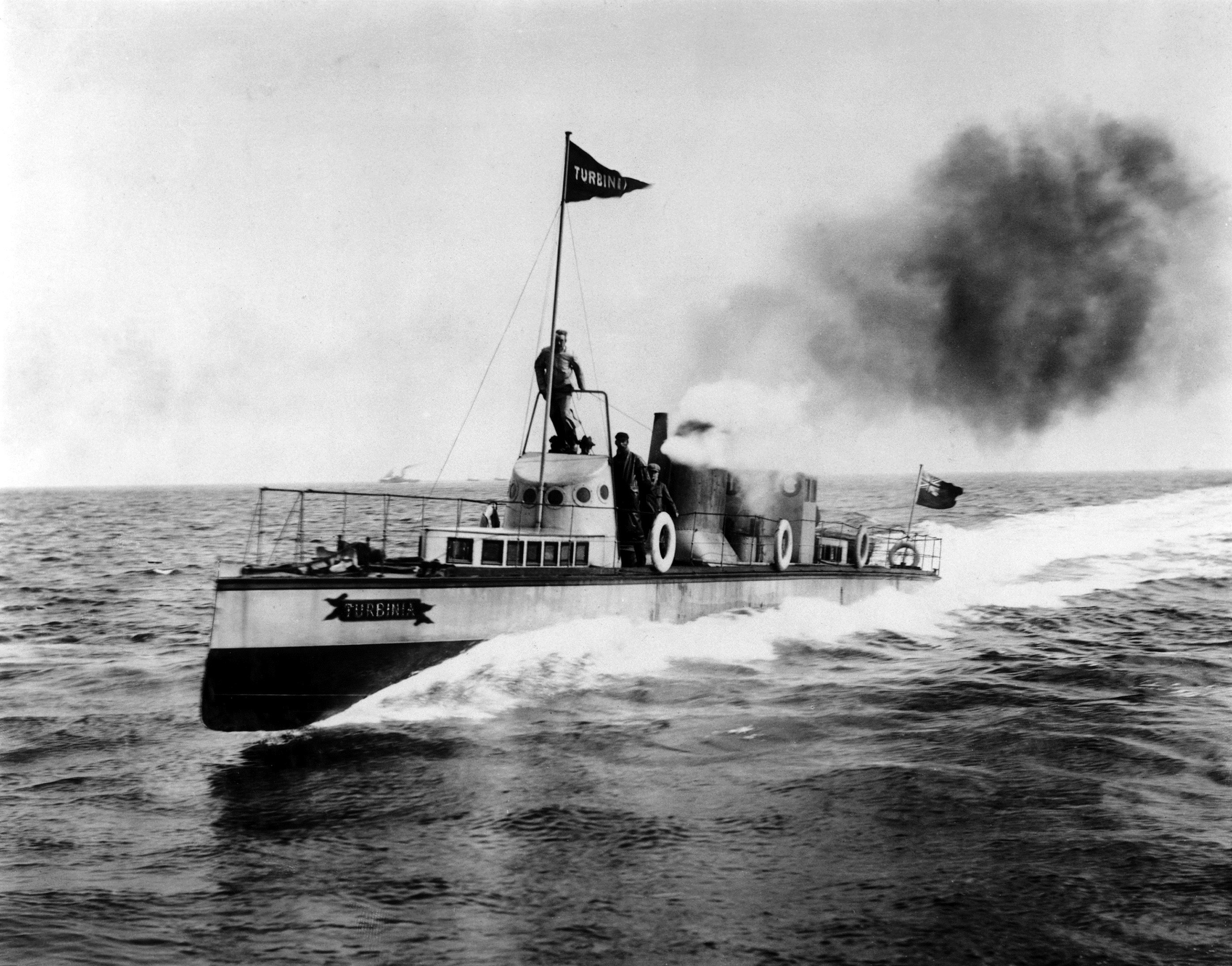
Launched on the Tyne in 1894, Turbinia was the world’s first ship powered by steam turbines. Designed by North East engineer Charles Algernon Parsons, she was created to prove a revolutionary idea: that turbine engines could drive ships faster, more efficiently, and more smoothly than any existing technology.
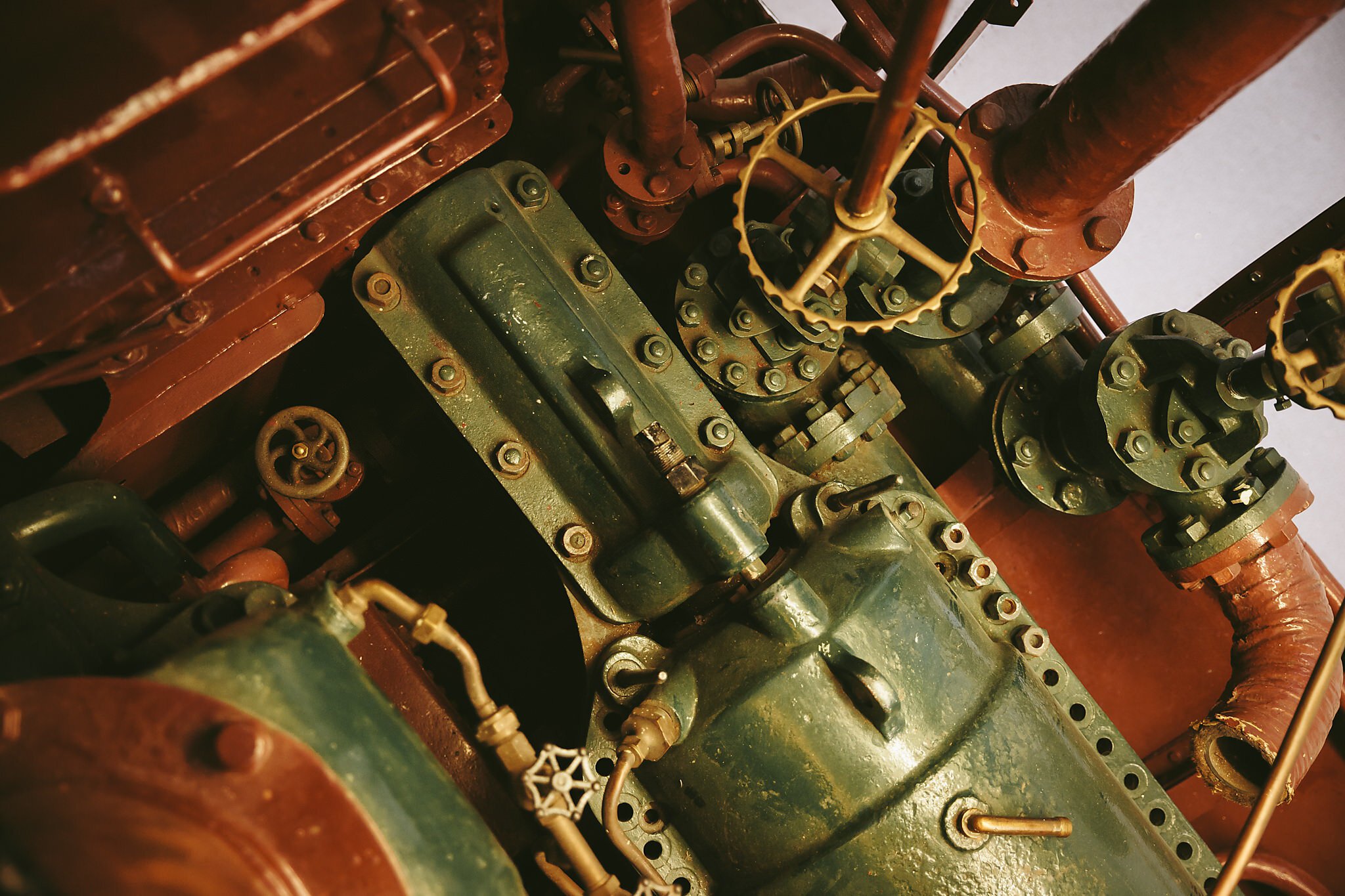
Early trials were promising but limited—until 1897, when Turbinia made her legendary appearance at Queen Victoria’s Diamond Jubilee Naval Review. Racing through the fleet at a then-astonishing 34 knots, she outpaced every vessel present and captured global attention. The demonstration convinced navies and shipbuilders that the future belonged to the turbine.
Within a decade, turbine propulsion powered the world’s fastest vessels, the great transatlantic liners, and eventually famous ships like HMS Dreadnought and RMS Mauretania. Today, Turbinia rests in Discovery Museum as one of the North East’s greatest engineering achievements—a symbol of innovation that transformed marine engineering and reshaped the modern world.
Rachel Mary Parsons (1885–1956), daughter of Charles Parsons, was one of Britain’s first professionally trained women engineers and a driving force in advancing turbine technology and engineering. Growing up with Turbinia as a symbol of technical possibility, she built her own career by pushing those possibilities further.
During the First World War, she played a key role at the Parsons Works, where Turbinia had been born decades earlier. There, Rachel organised and led the technical training of women entering engineering for the first time—ensuring turbine production and other essential war work could continue at the highest standard. Her leadership directly shaped the workforce and skills base that sustained Britain’s turbine industry.
Determined that women should remain part of engineering after the war, Rachel co-founded the Women’s Engineering Society in 1919, becoming its first president. Through campaigning, publishing, and public advocacy, she worked to secure women’s access to technical education and professional recognition, helping to diversify the talent shaping turbine development and wider engineering progress.
Rachel Parsons ensured that the innovation represented by Turbinia did not remain a closed world. Her achievements broadened who could contribute to engineering, strengthening the industry that the pioneering vessel had helped ignite.
In 1994, one of Discovery Museum's best-known exhibits was transported from Exhibition Park to the new Museum - Turbinia, the first ship to be powered by steam turbines, now has pride of place in Discovery's entrance hall. Crowds of people gathered to watch Turbinia as she was transported through the streets of Newcastle from Exhibition Park to her new home.
| Monday - Friday | 10am – 4pm |
| Saturday - Sunday | 11am – 4pm |
| Bank holidays | CLOSED |
Free entry (donations welcome). No booking required.
Information: On Friday 23 October the café opens at 11am.
Discovery Museum
Blandford Square, Newcastle upon Tyne, NE1 4JA
Tel: (0191) 232 6789 | Email: info@discoverymuseum.org.uk