L-INK guide to Mali Morris
An activity sheet designed by L-INK group members.
Managed by North East Museums on behalf of Newcastle University
Are you 16-21 years old? Would you like to work with artworks, artists, curators & collections? Do you like meeting new people working as part of a team?
L-INK are looking for YOU!
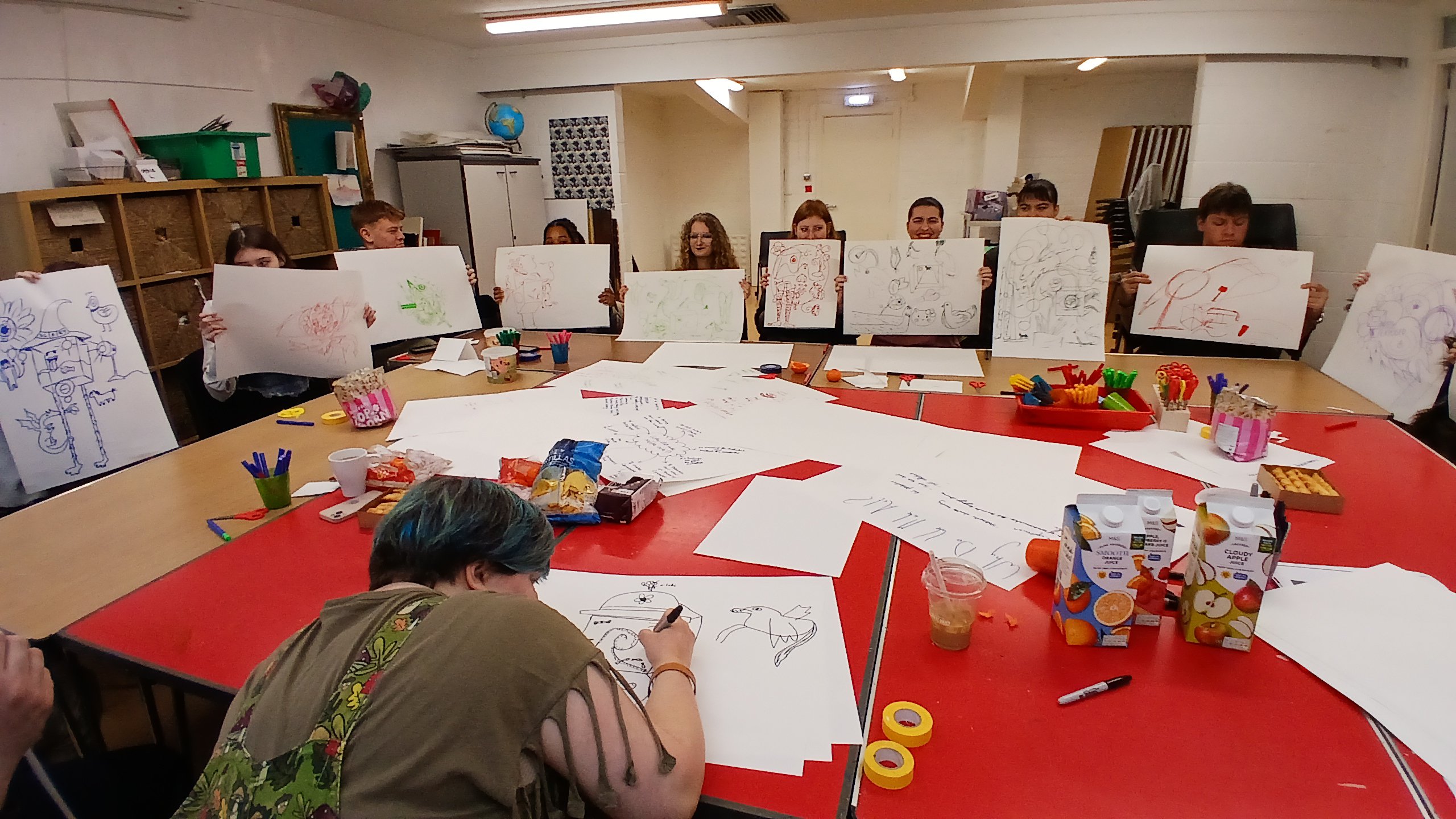
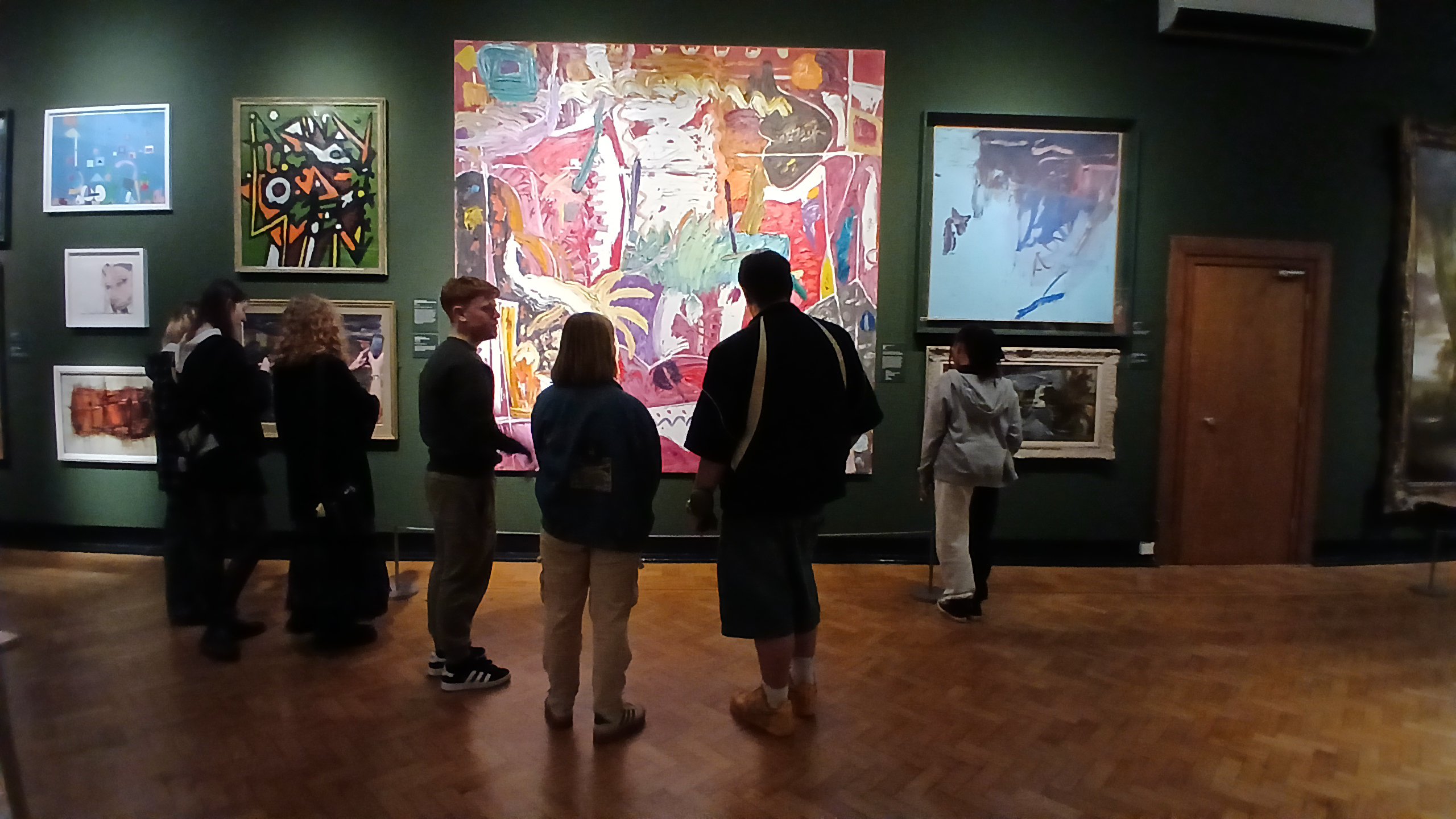
L-INK are a group of young people who work with the Hatton Gallery to create events, workshops, resources and make their own art work. The project runs annually, beginning each year in October and finishing in June – July, in line with school and college terms. Each year, the L-INK project invites new participants to join, as some older members leave to study or work in different places. The group is usually made up of a core 15 young people, who attend schools and colleges in Newcastle, Northumberland, North Tyneside and Durham.
The L-INK project builds on themes from the previous year during which the group, inspired by Laing & Hatton exhibitions, have considered the relationship between artist and curator, working with collections and with practising artists.
Find out more about the L-INK 2026/27 project.
See what L-INK have been up to in the past:
About the Hatton Gallery
Newcastle University’s Hatton Gallery was founded in 1926 and named in honour of Professor Richard George Hatton, professor of what was then the King Edward VII School of Art, Armstrong College, Durham University. He subsequently became Head of the Department of Fine Art at Newcastle University.
The Hatton’s diverse collection includes over 3,000 works from the 14th – 20th centuries. Key pieces in our paintings collection include works by Francis Bacon, Prunella Clough, Richard Hamilton, Palma Giovane, Patrick Heron and William Roberts. The gallery also has extensive archive material including paintings, sculpture, prints, drawings and textiles, and material connected to the history of the Gallery, such as exhibition posters designed and printed in the art school.
The Merz Barn Wall
The Merz Barn Wall is part of a construction created by German artist Kurt Schwitters in a Lake District barn in 1947-8. The Elterwater Merz Barn was based on the idea of collage, in which found items are incorporated into an art work. Schwitters applied a rough layer of decorator's plaster and paint over these found objects, giving the three dimensional collage an abstract quality. Asked what it meant, he replied 'all it is, is form and colour, just form and colour'.
The barn was designed as a permanent structure, somewhere Schwitters could exhibit existing work. When he died in January 1948 it was left unfinished. In 1965, after lengthy discussions about the barn's future, the Wall was given to Newcastle University who undertook its removal, restoration and preservation.
About the Laing Art Gallery
The Laing Art Gallery was founded in 1901, by Alexander Laing, a Newcastle businessman who had made his money from his wine and spirit shop and beer bottling business. Alexander Laing didn’t leave any paintings or other art to the Gallery. He said that he was confident “…that by the liberality of the inhabitants [of Newcastle it would soon be supplied with pictures and statuary for the encouragement and development of British Art”.
The gallery today is home to an internationally important collection of art, focusing on British oil paintings, watercolours, ceramics, silver and glassware.